



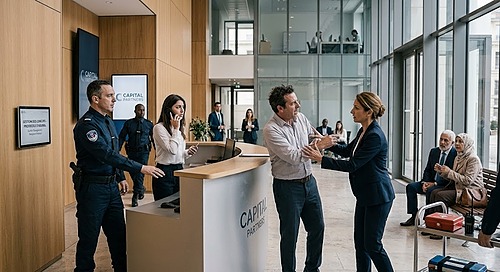
Identify a physical threat and prioritize safety reflexes.
Goals
- Observe the signs of danger and anticipate escape routes.
- Adapt your communication without exaggerating the threat.
- Knowing the protective measures discussed in practice.
Program
Prevention and the environment
- Assess access points, exits and risk factors; prioritize escape.
- First rule of physical security: escape rather than confront.
- Examine the environment and quickly understand the location (layout, lighting, access routes, escape routes.
Communication under threat
- Maintain listening, adjust voice and posture, raise the alarm.
- Exploring the language of gestures and the language of the body.
- Explore what open gestures are.
Reading behaviors
- Observe body language and maintain a safe distance.
- Base guard positioning, security placements.
- Instinctive defenses: dodging, movement, etc.
Practical protection
- Practice the movements, parries and disengagements of the program.
- Exploring the body's and mind's reactions to a stressful situation: natural reactions.
- Clarifying your stress to react better: Visualization, anchoring, etc.
Stress after the incident
- Recognize your reactions and use techniques to return to calm.
- Apply these guidelines to a concrete professional situation.
Practical application and feedback
- To work on a situation close to the participants' real-world experience.
- Compare several responses and observe their effects in an exchange or incident.
- Develop reflexes adapted to one's professional context.
Evaluation and validation methods
Prior self-assessment and assessment of acquired skills at the end of training.
Target audience
Employees likely to experience verbal or physical violence
Prerequisites
No prerequisites