


Regulatory changes in occupational health rarely make headlines, but they have a very real impact: they shift what companies must prove, what they must measure, and what they must improve. And when it comes to chemical, physical, or biological risks, the core issue is almost always the same: the gap between "we know" and "we have control.".
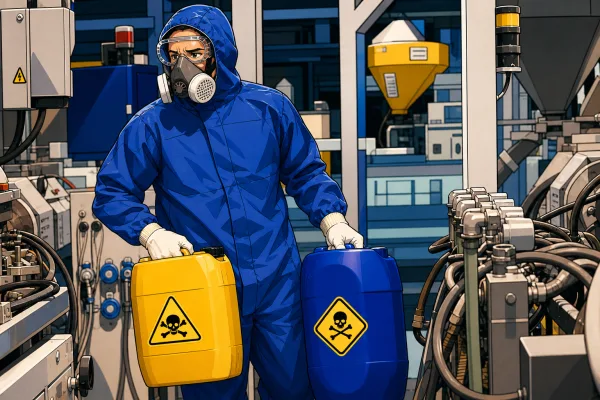
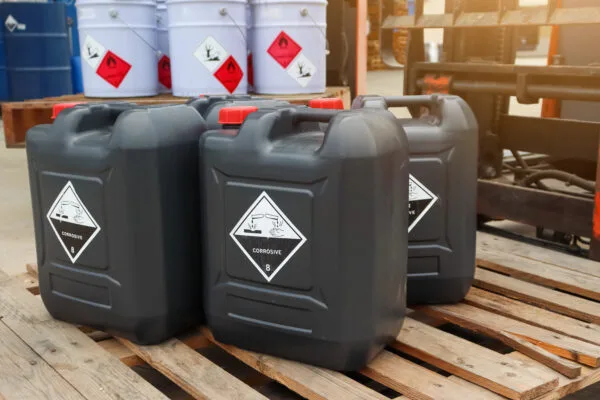
Regarding chemical risks, the trend has been clear for several years: more substances are regulated, exposure limits are changing, and traceability is becoming more demanding. In France, having a reliable reference framework is essential: the INRS (National Research and Safety Institute for the Prevention of Occupational Accidents and Diseases) provides a database of occupational exposure limits (OELs), useful for structuring assessment and prevention. Adding to this trend are European changes: a directive, in particular, lowers the exposure limits for lead and regulates diisocyanates, with very direct impacts for exposed companies (maintenance, paint, resins, adhesives, construction, industry).
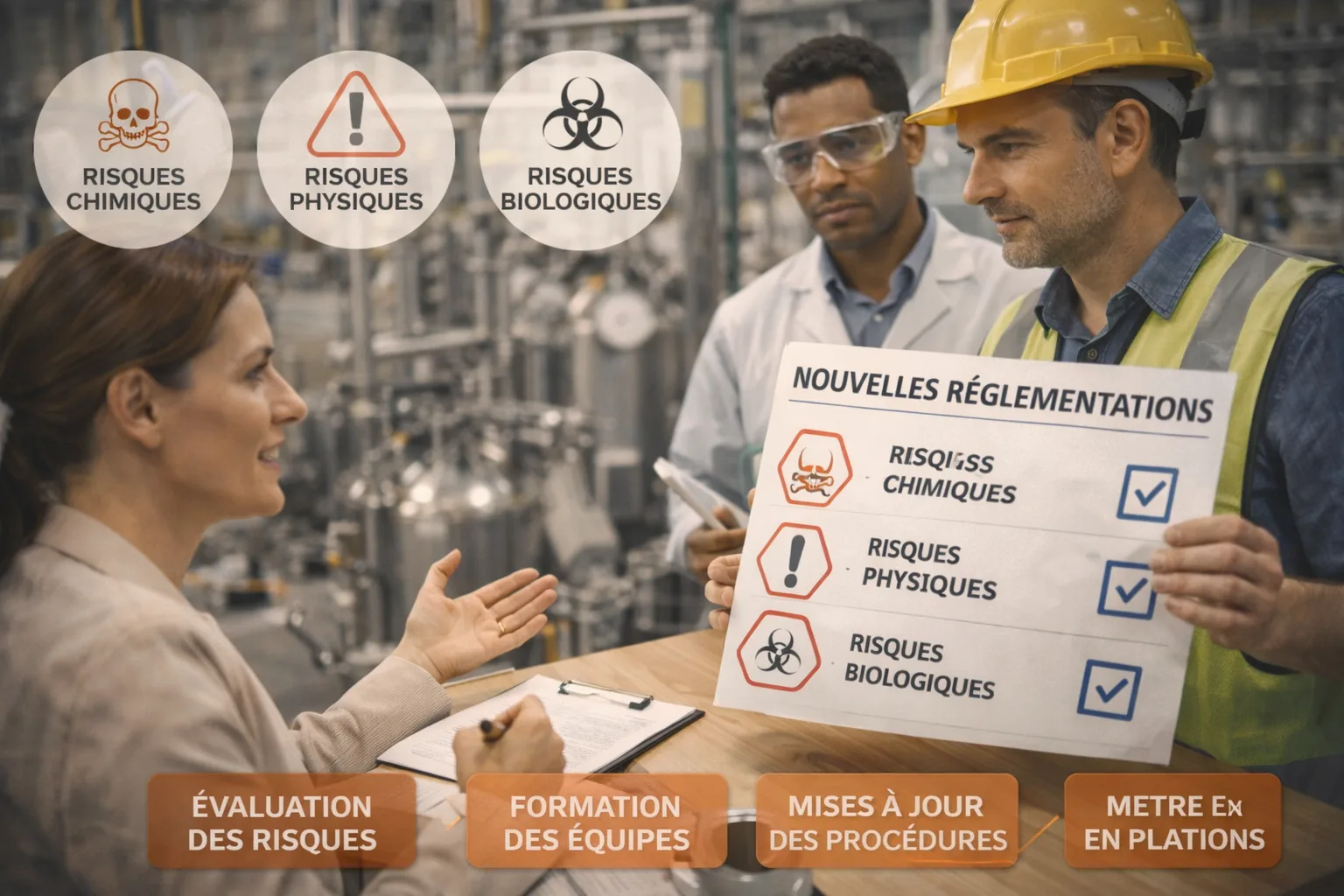
In reality, it's not simply a matter of "updating an SDS." It involves revisiting your control strategy: substitution when possible, capture/ventilation and maintenance of equipment, exposure monitoring (when necessary), truly appropriate PPE, training, and above all, consistent documentation. The sticking point is often the reality on the ground: overly cumbersome procedures, workarounds, improvised storage, and concurrent activities. This is where prevention fails if it remains confined to the office.
Regarding physical risks, two issues are increasingly important: heat and ergonomics (musculoskeletal disorders). Since July 1, 2025, the prevention of heat-related risks has been strengthened in the Labor Code, which requires that this risk be treated as a fully-fledged occupational hazard, with appropriate assessment and measures.
In reality, the impact isn't simply "issuing a reminder." It's about organization: adapting schedules, managing breaks, providing water, reviewing certain tasks, anticipating potential problems, formalizing simple instructions, and conducting on-site monitoring. And the heat is also a safety issue: it increases the likelihood of errors, falls, and internal traffic accidents.
Regarding biological risks, many companies focus on the "obvious" sectors (healthcare, laboratories). But biological risk also exists in more commonplace contexts: waste, sanitation, maintenance, cleaning, agri-food, interventions in degraded environments, mold, legionella, etc.
The most frequent operational impact is not a lack of scientific knowledge, but a lack of clear guidelines. Who is exposed? When? Which actions actually protect against exposure? Which hygiene rules are non-negotiable? How are incidents managed?
In all cases, the most effective strategy is to avoid "text-based" management and instead manage "exposure-based" management. In other words: identify the positions and situations where exposure is plausible, verify existing measures, fill in any gaps, and document what demonstrates control.