


In many companies, safety is still primarily addressed from the perspective of rules to be followed. Procedures are disseminated, instructions are posted, safety talks are organized, and mandatory equipment is regularly reiterated. Yet, on the ground, discrepancies persist: instructions are ignored, shortcuts are taken "to get things done faster," long-standing habits persist, and there is resistance to certain new measures. Between the prescribed standard and the actual work environment, the gap is sometimes considerable.
A strong safety culture is characterized by several recurring traits. First, safety is considered a shared value, not just an obligation. Employees at all levels believe it's normal to stop when a situation appears dangerous, to refuse work they deem too risky, and to report a near miss. They feel empowered to do so without fear of reprisal or remarks like "we don't have time for that.".
It is unrealistic to expect operators to consistently wear their PPE or follow protocols if managers themselves take shortcuts, disregard certain rules, or fail to meet the same requirements. A manager who enters a workshop without a helmet or safety glasses sends a very clear message: ultimately, this equipment is optional. Conversely, a manager who meticulously adheres to the rules, accepts reminders, and explains the rationale behind these requirements significantly contributes to legitimizing the approach.
Many employees struggle to understand why a particular rule exists, especially if it complicates their work or lengthens certain processes. When instructions are perceived as disconnected from reality, arbitrary, or dictated solely "by insurance companies" or "for auditing purposes," the temptation to circumvent them is strong. It is therefore essential to take the time to explain the origin of the requirements: what accidents, sometimes serious, led to their establishment; what specific risks they help to mitigate; and what alternatives were explored. Sharing experiences and concrete examples is often more effective than an abstract reminder of the regulations.
Imposing procedures designed far from the field, without testing or discussing them with those who will implement them, is the surest way to create resistance. Conversely, involving operators in analyzing work situations, including them in finding solutions, and testing different systems with them before rolling them out more broadly, makes it possible to reconcile safety and efficiency. This collaborative approach doesn't mean that all the demands from the field will be met, but it often allows for finding intelligent compromises that are easier to accept.
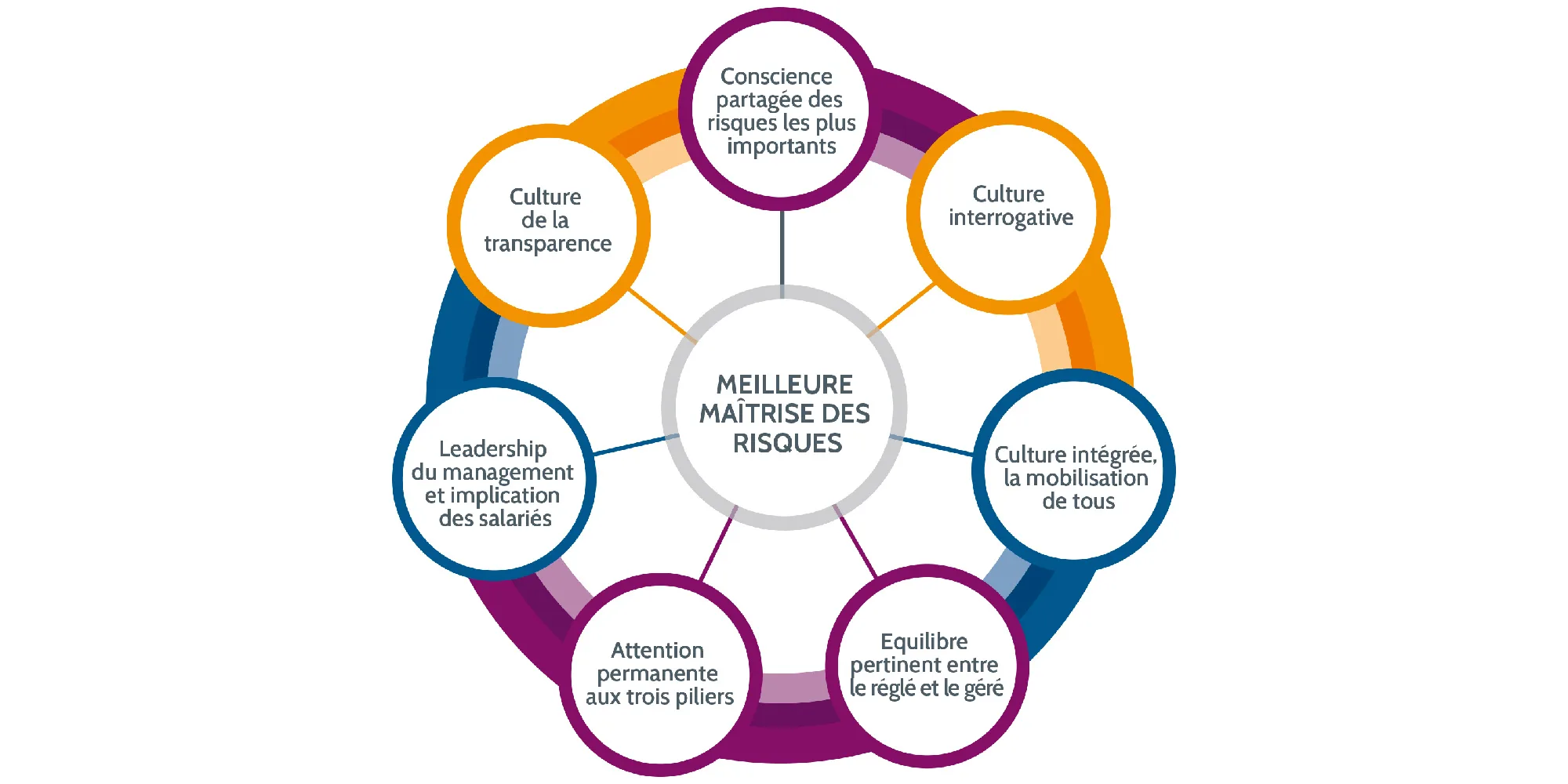
The way deviations and incidents are handled is another indicator of a safety culture. In an organization where every infraction is immediately punished, without any attempt to understand the causes, employees quickly learn to remain silent. They conceal near misses, downplay incidents, and avoid reporting difficulties. In a more mature culture, a distinction is made between deliberate misconduct and errors stemming from poorly anticipated situations, insufficient training, or ambiguous instructions. The focus then shifts to "why" rather than simply "who," analyzing root causes and seeking to improve the system rather than stigmatizing individuals.
Regular activities such as the "safety briefing" at the start of a shift, site visits by managers, incident reviews with teams, and days or weeks dedicated to safety all help keep the topic alive. But these rituals shouldn't become mere formalities. A safety briefing where a document is read without discussion, a visit where boxes are simply checked, or a "safety" day perceived as a pointless interlude can even breed cynicism. The goal is to foster genuine exchanges where everyone can speak, ask questions, and propose ideas.
Finally, recognizing safe behaviors is a frequently overlooked lever. Many companies are quick to point out what's wrong, but forget to celebrate what's right. Highlighting a team that made a sound decision in a dangerous situation, publicly thanking an employee who reported a serious risk, or sharing a story where a colleague's vigilance prevented an accident are all concrete ways to demonstrate what is expected. It's not about handing out bonuses for every act of caution, but about creating an environment where these behaviors are recognized as the norm, not the exception.
Building a safety culture is a long-term endeavor that goes beyond a one-off action plan. It's a gradual transformation that impacts values, habits, and reflexes. Executives, HR, HSE teams, and line managers each have a role to play. But the reward is significant: safer teams, greater trust, fewer accidents, reduced hidden costs, and a company perceived, both internally and externally, as a responsible employer.