



Achieving 30% representation of each gender among senior managers and governing bodies is not a public relations exercise. It's a transformation of the managerial pipeline: recruitment, promotion, mobility, access to key positions. And that's precisely what makes it difficult: you can't create balanced representation in three months if you haven't laid the groundwork.
For the companies concerned (at least 1,000 employees), the target of 30 %s (one-year temporary employment contracts) by March 1, 2026, is clearly stated, with a logic of publication/declaration and an obligation to achieve results. In other words: the discussion is shifting from an "effort" to a "landing.".

The classic trap, as the deadline approaches, is to seek quick fixes: renaming positions, adjusting responsibilities, "placing" people on committees without giving them real power, or multiplying symbolic appointments. These strategies may produce a figure… but they destroy credibility, and above all, they transform nothing. The question isn't simply "who sits at the table?" It's "who actually has access to responsibilities, budgets, and decisions?".
To achieve success without resorting to superficial fixes, the issue must be treated as an HR engineering problem: identifying bottlenecks and addressing their root causes. In many companies, the bottleneck lies in two areas. First, access to entry-level positions (P&L, plant management, sales management, program management) which then determine access to senior management roles. Second, mobility: some career paths are accelerated by challenging experiences (internationalization, transformations, crises) which are not distributed equitably.
An effective strategy therefore begins with mapping critical roles and the career paths that lead to them. We look, quite factually, at who currently holds entry-level positions, who is identified as a successor, and over what timeframe. And we ask a simple question: in reality, does our system naturally produce 30 %… or does it produce a reproduction of historical profiles? If it's the latter, actions must focus on the rules of the game, not on slogans.
The second building block is the promotion and appointment decision. Many organizations have highly qualitative "talent reviews," sometimes influenced by visibility, networking, personal connections, or unintentional biases. To achieve a representativeness objective, these reviews need to be more structured: explicit criteria, evidence of performance, consideration of potential, and above all, follow-up on decisions over time. A talent review is only valuable if it genuinely changes the composition of the talent pool.
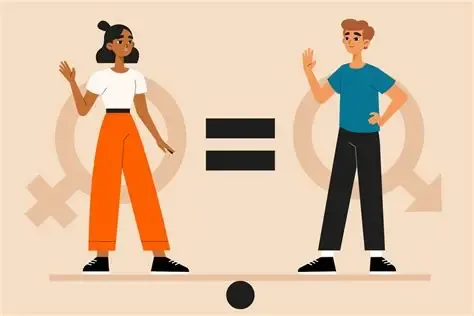
The third building block: the organization of work at the management level. Without being naive, it must be said: some women (and some men) deviate from the management path not through a lack of ambition, but because the implicit model of the position (constant presence, long hours, total availability, unplanned travel) is daunting or incompatible with certain constraints. Working on representation also means working on the sustainability of roles: delegation, pairings, clarity, planning, meeting rules, and the quality of the management team.
Conclusion
The 30 % target by March 1, 2026, is a revealing indicator: it shows whether your organization is truly building balanced trajectories, or if it's just making minor adjustments. Companies that achieve lasting success are those that transform the pipeline, not those that optimize a snapshot.