


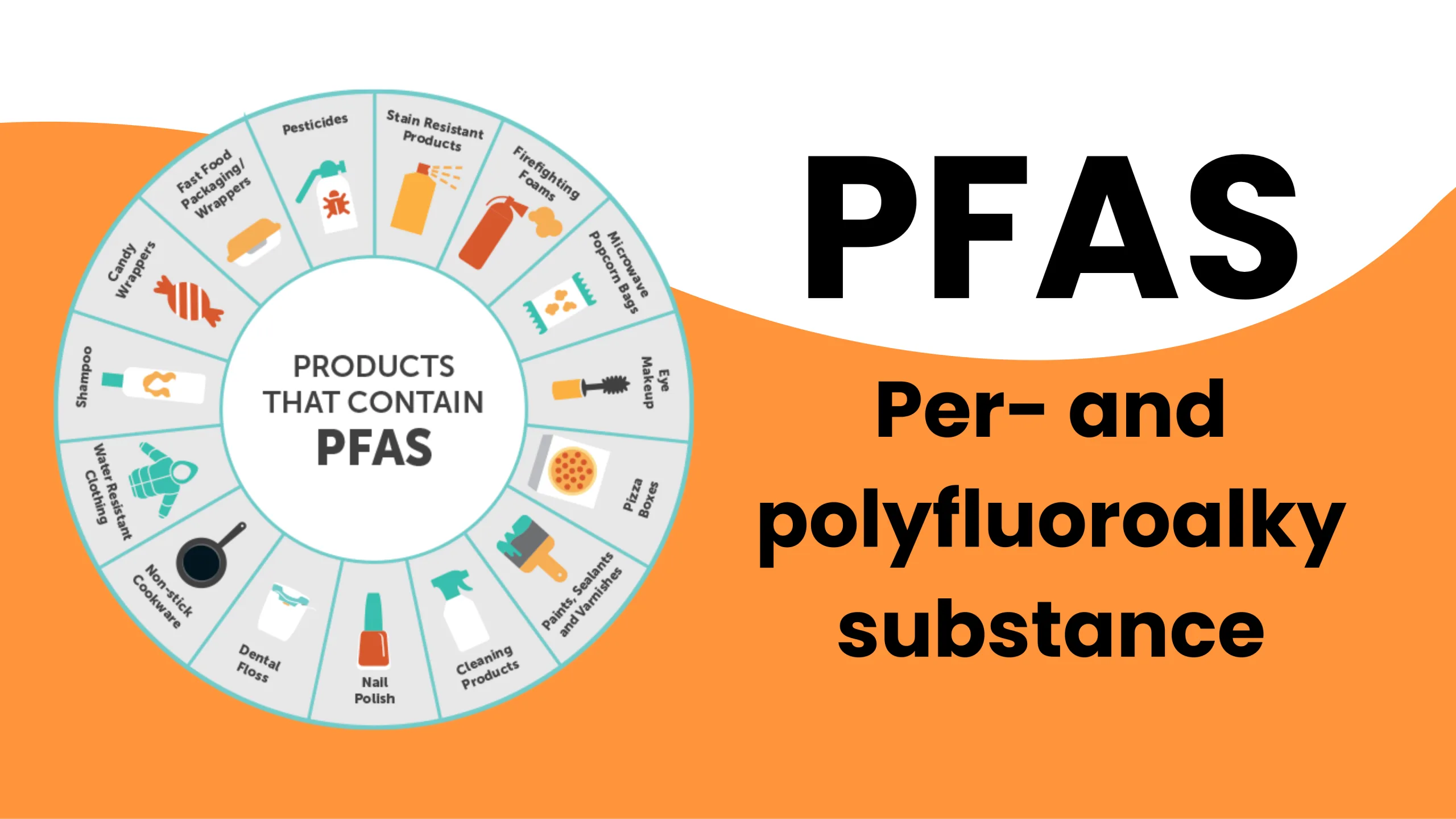
PFAS («perennial pollutants») are no longer an issue confined to the chemical industry. By 2026, they will be a matter of purchasing, products, compliance, and reputation for a very large number of companies, including those that don't feel they «use them.» Why? Because PFAS are found in a wide range of applications: textiles, waterproofing agents, surface treatments, certain formulations, certain equipment… and French regulations are initiating a very concrete, phased ban.
Since January 1, 2026, the following are prohibited (manufacturing, importing, exporting, and placing on the market): cosmetics, ski waxes, and clothing/shoes plus their waterproofing agents, with an exception for certain protective clothing/shoes. The same official source indicates an extension on January 1, 2030, to "all textiles" containing PFAS, with exceptions (industrial technical textiles listed by decree) and residual thresholds defined by decree.
And it doesn't stop at the principle: implementing texts specify thresholds, exemptions, and operational elements. Localtis explains, in particular, that two decrees published at the end of December 2025 specify concentration thresholds, list exemptions, and provide for a 12-month stock clearance period for products manufactured before January 1, 2026.
The classic trap: believing that "this is not my sector"«
In practice, a company can be affected in three ways:
- it places the products concerned on the market (brand, importer, distributor); ;
- she buys and supplies clothing/shoes or treatments; ;
- It is in a value chain where customers and clients demand "PFAS-free" proof.
Even if you do not sell textiles, you can buy PPE, workwear, footwear, waterproofing treatments, or manage historical stock.
The "pro" answer: a three-step plan (inventory → decision → proof)
The first step is intelligent inventory. Not a theoretical inventory, but a decision-oriented one: where are the PFAS risks in your products, purchases, and stock? The difficulty is that "PFAS" doesn't always appear on a technical data sheet. Therefore, a structured purchasing approach is necessary: require suppliers to declare the presence of PFAS (and if possible, specify the family and thresholds), request compliance documentation, and identify the risk categories (treated textiles, waterproofing agents, "stain-resistant" finishes, certain polymers/treatments). This is where companies save time by targeting their needs: start with recurring purchases and volumes/reputational risks.
The second step is the substitution decision. This isn't driven by slogans ("we're replacing everything"), but by the risk/feasibility trade-off. Some substitutions already exist and are commonplace; others are more technically complex (performance, durability, safety requirements). Localtis also highlights the existence of exemptions "in the absence of a substitute solution" for certain uses (particularly medical). This should inspire a governance approach: documenting why we're replacing something, why we can't yet, and what path we're taking.
The third step is proof. In 2026, the main risk isn't simply "non-compliance." It's the inability to demonstrate compliance when a customer, an audit, or an inspection questions a product. Proof includes: updated specifications, supplier clauses, certifications, batch traceability, and inventory management (particularly regarding products manufactured before 2026 and their sale periods).
And in terms of communication: remain understated and factual.
Regarding PFAS, communicating a "zero PFAS everywhere" approach is risky if your scope isn't well-defined. A more credible approach is more robust: "Here are the product families concerned, here is our plan, here are the substitutions we've implemented, here are our justified exceptions, and our roadmap.".
Conclusion
In 2026, PFAS (Pharmaceutical Products for Sale) will be a highly operational compliance issue: bans will take effect on January 1, 2026, across several categories, with further expansions planned, and thresholds and exemptions to be specified by decree. Companies that are thriving are those that have transformed this issue into a core purchasing/product discipline: inventory management, documented decisions, and evidence.