




When properly organized, structured, and actively supported, teleworking is a powerful tool for reducing certain types of travel. By allowing employees to avoid commuting to the office every day, companies reduce traffic congestion, transportation-related emissions, and travel time. However, its actual impact depends on the frequency (one day a week does not have the same effect as three), the average home-to-work distance of the employees involved, and the overall organization. Simply authorizing teleworking is not enough to generate significant environmental benefits; it is also essential to ensure that it does not create rebound effects (such as additional travel of a different nature).
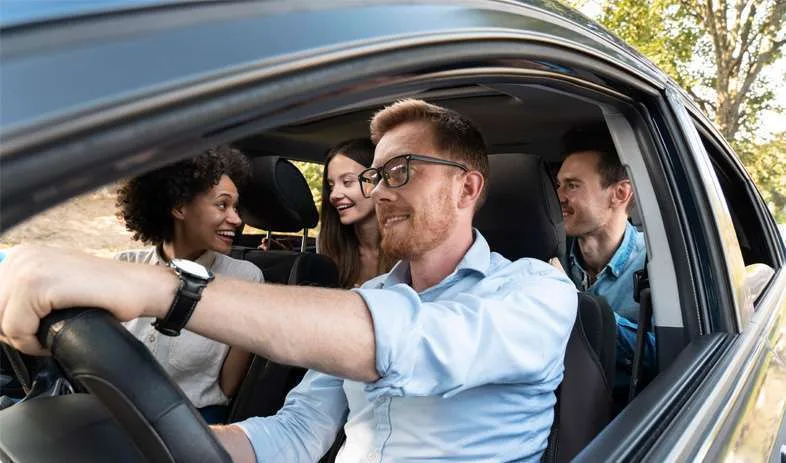
Carpooling to and from work is another lever, often promoted but difficult to sustain without support. Irregular work schedules, family constraints, and reluctance to share a vehicle with strangers can sometimes limit its adoption. To improve the chances of success, it is helpful to offer simple matching tools (dedicated platforms, internal groups), reserve priority parking spaces for vehicles transporting several employees, and regularly communicate the advantages (shared cost, social interaction, reduced environmental impact). Agreements with specialized operators can also help implement tailored solutions.
Active modes of transport—walking, cycling, and scootering—are gaining importance, particularly in urban and suburban areas. Companies can encourage them in various ways: secure bicycle parking, showers or changing rooms, bicycle mileage allowances, and partnerships with local rental or repair providers. Here again, the challenge is to adapt measures to the context: not all sites are equally well-suited to cycling, and not all employees have the same opportunities.
Employer mobility plans (or travel plans) provide a structured framework for combining these different levers. They are based on an assessment of current practices: how do employees get to work? Where do they come from? What are the main reasons for business travel? From this assessment, improvement scenarios can be developed: strengthening public transport links with local authorities, adjusting work schedules to avoid peak hours, encouraging teleworking, promoting carpooling, and upgrading the vehicle fleet to less polluting engines.

Business travel also deserves specific consideration. The widespread use of videoconferencing tools offers alternatives to some journeys, but face-to-face meetings remain necessary in many cases. The challenge, therefore, is to systematically ask ourselves if each trip is truly necessary: is it essential? Can it be combined with other appointments to avoid multiple trips? Can trains replace planes or cars for certain distances, even if the travel time differs but remains usable for work? Travel policies must be rethought in light of environmental and well-being considerations, and not just immediate costs.
Human Resources plays a crucial role in these transformations. They help define remote work agreements, manage working time, adapt schedules, and raise employee awareness. HR must also remain attentive to the social impacts of these measures: some employees may feel excluded from remote work arrangements, while others may encounter practical difficulties in adopting certain modes of transportation. Taking these realities into account is essential to avoid frustration or feelings of inequality.
Managers, for their part, are the daily regulators of their teams' travel. They largely decide whether physical presence is necessary, how often in-person meetings are held, how routes are organized, and whether video conferencing is acceptable. Their example matters: a manager who systematically favors private cars for short trips while asking their teams to reduce their travel sends a contradictory message. Conversely, a manager who adopts more sustainable mobility practices and plans their travel intelligently demonstrates that change is possible.
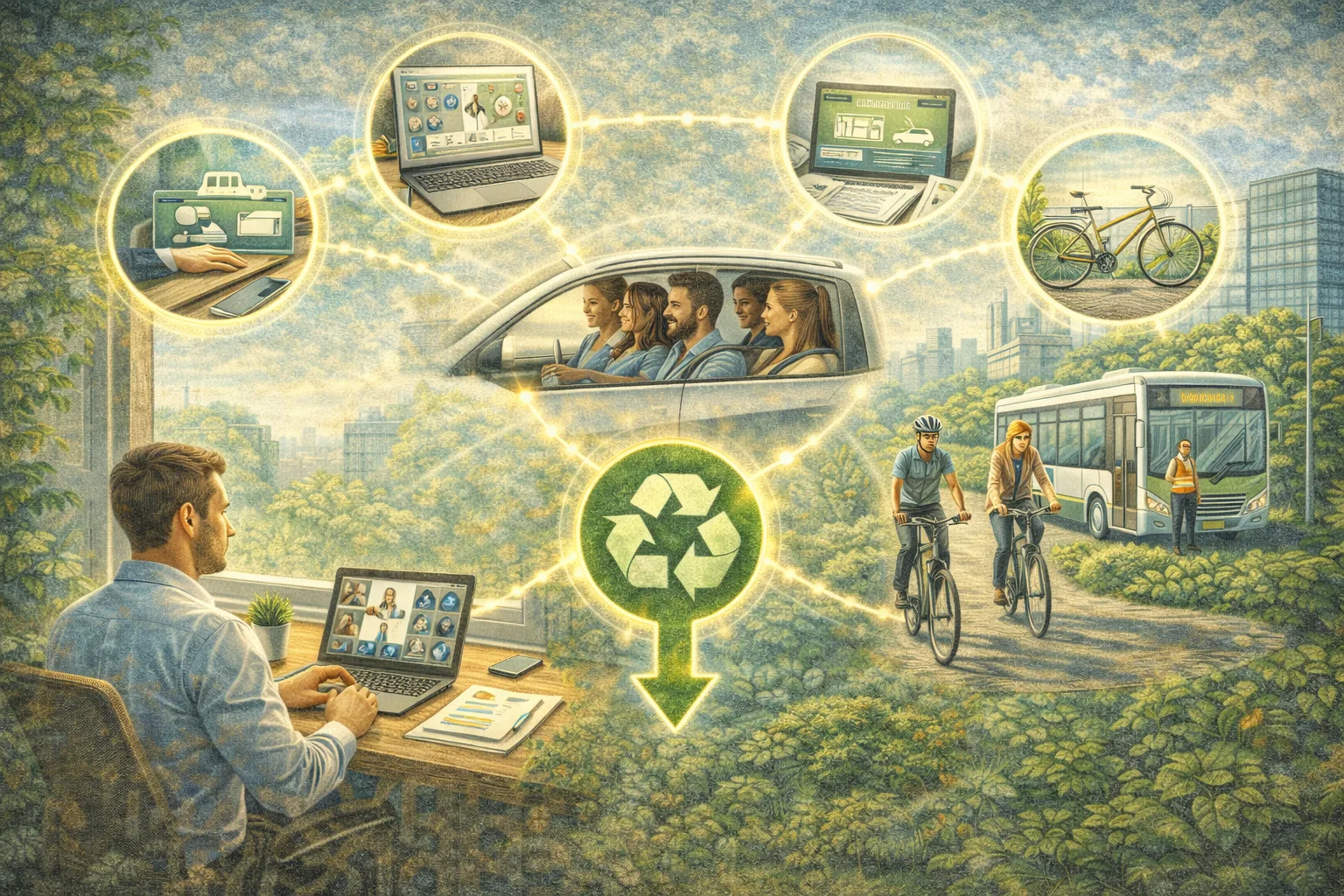
Sustainable employee mobility is an area where feedback and lessons learned are particularly valuable. Many companies have already implemented mobility plans, cycling incentives, carpooling platforms, and revamped travel policies. Drawing inspiration from these experiences, and learning from what worked, what didn't, and why, saves time and helps avoid certain pitfalls. The most effective solutions are often those that combine several approaches, are adapted to the local context, co-created with employees, and integrated into a broader project focused on quality of work life and the environmental transition.