


Eco-design is often discussed as a matter for design offices or R&D. This makes sense: that's where choices about materials, design, processes, packaging, and repairability are made. But in the real world of businesses, eco-design rarely fails for lack of technical ideas. It fails more often due to a lack of alignment: vague objectives, inconsistent trade-offs, insufficient skills, and above all… a work organization that doesn't allow for a different approach.
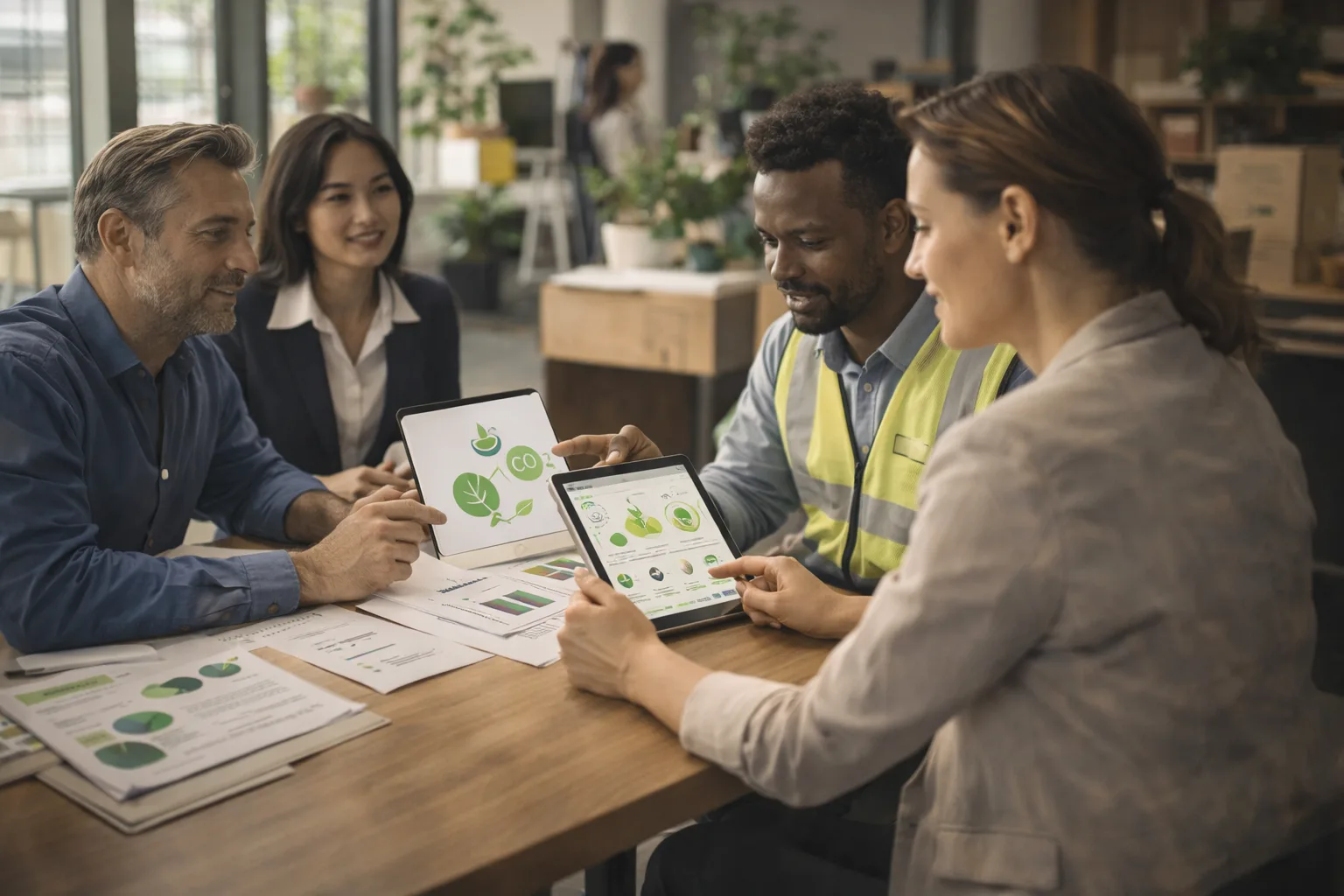
This is where cooperation between business teams and HR becomes a decisive factor. Because eco-design isn't just a method. It's a transformation of roles, skills, and routines. And these are precisely the domains of HR.
The real obstacle: eco-design competes with short-term performance reflexes.
In many organizations, historical reflexes are strong: reduce costs, meet deadlines, industrialize quickly, and minimize the risk of poor quality. Eco-design adds a new constraint: considering the environmental impact across the entire life cycle. As long as this constraint remains peripheral, it gets sidelined in decision-making. The project moves forward… then reverts to «classic» design at the first sign of a problem with cost, supply, or deadlines.
The primary role of HR here is not to "raise awareness." It's to help the company make these trade-offs explicit and consistent. When decision criteria change, objectives, governance, and evaluation methods must also change. Otherwise, teams are being asked to perform better... while being evaluated in the same way as before.
A simple cooperation: linking skills, decisions and recognition
In concrete terms, cooperating means setting up three bridges.
The first bridge is skills. Businesses need practical tools: simplified life cycle analysis, material selection, packaging, recyclability, repairability, digital sobriety for services, substance management, customer requirements, and sometimes product regulations. HR can transform these needs into realistic pathways: a common foundation (understanding impacts), then job-specific modules, and finally internal experts capable of providing coaching. When this pathway doesn't exist, eco-design depends on a few motivated individuals… and never scales up.
The second bridge is that of decision-making. If you want eco-design to withstand the pressure, you must integrate it into the rituals where decisions are made: design reviews, project milestone reviews, investment committees, and procurement arbitration. HR can help formalize simple "expectations": what environmental criteria should be discussed at each milestone? What level of evidence is required? Who is responsible? Once these questions are integrated into governance, eco-design ceases to be an "extra" and becomes a standard.
The third bridge is that of recognition. This is an often underestimated point: if a team takes the time to design more sustainably, but is penalized on its time, cost, or volume targets, the message sent is destructive. HR can help adjust objectives and evaluation criteria: not by inventing complexity, but by explicitly recognizing the effort to reduce impact, the risk management, and the quality of the trade-offs.
The winning combination: "business + HR" to ensure successful scaling up
When you want to make eco-design operational, there's a key moment: the transition from pilot to full deployment. This is often where everything falls apart. The teams have created a more sustainable prototype… but production says it's complicated, purchasing says the supply chain isn't stable, quality control is worried, and sales fears a change perceived by the customer. This is normal. Eco-design impacts the entire value chain.
In this phase, HR/business cooperation enables three very concrete actions: organizing a structured feedback session, documenting lessons learned (what works, what doesn't), and integrating these lessons into standards and training programs. Without this documentation, each project starts from scratch, and eco-design remains a collection of isolated initiatives.
Conclusion
Eco-design isn't just another "technical" subject. It's a shift in how we make decisions and work. The technical aspects provide the solution; HR provides the capacity to make it sustainable: skills, governance, recognition, and established routines. When these two worlds cooperate, eco-design becomes a collective skill, not a fragile endeavor.