


Introduction
The woodworking sector, representing over 25,000 businesses in France and employing nearly 100,000 people, is one of the sectors most exposed to occupational hazards. The shaping, assembly, and finishing of various wooden structures expose carpenters and cabinetmakers to significant occupational risks of several kinds: the use of woodworking machinery and dangerous portable mechanical or manual tools (circular saws, sanders, etc.) can cause injuries to limbs and eyes that can be serious and become infected, highlighting the extent of the safety challenges in this traditional sector undergoing rapid technological change.
The evolution of production techniques, the introduction of numerically controlled machines, the increasing use of new composite materials, and the strengthening of regulations concerning exposure to chemical agents make a rigorous methodological approach to risk assessment essential. Company leaders, human resources managers, and prevention officers must understand the specific characteristics of this sector, where traditional craftsmanship now exists alongside the strictest safety requirements.
This article examines the regulatory foundations, the specific risks of woodworking workshops, recent technological developments and the legal responsibilities inherent in the operation of these production activities.

I. Regulatory and normative framework applicable to wood joinery
1.1. General obligations under the Labour Code
Article L. 4121-1 stipulates: "The employer shall take the necessary measures to ensure the safety and protect the physical and mental health of workers."«
Crucial provisions for the workshops:
- Occupational risk assessment Article R. 4121-1 mandates the transcription of occupational risk assessments into a single document (DUERP), covering all workstations and production phases.
- Safety training Article L. 4141-2 requires the organization of appropriate practical training including the use of work equipment and personal protective equipment
- Periodic checks Article R. 4322-1 mandates periodic general inspections of equipment, which are particularly critical for woodworking machinery.
1.2. Machinery Directive 2006/42/EC and its impact
- CE marking required All equipment placed on the market since 1995 bears the CE marking, including circular saws, jointers, planers, spindle moulders, mortisers and sanders.
- Instructions Each machine comes with instructions in French specifying conditions of use, maintenance and safety measures.
- Risk assessment by the manufacturer Identification of hazardous phenomena and integration of necessary protective measures
- Impact on older equipment Machines manufactured before January 1, 1997 must comply with the minimum technical requirements of the decree of March 5, 1993, regarding protective devices.
1.3. Building and Housing Code: Specifics of Workshops
- Premises ventilation Article R. 111-6 mandates ventilation systems adapted to dust and chemical fumes.
- Fire protection Articles R. 143-2 et seq. define crucial measures for environments storing combustible materials.
- Accessibility and evacuation Evacuation routes and procedures must take into account bulky equipment
- Electrical installations The NF C 15-100 standard requires specific protection in dusty and humid environments.

II. Mechanical risks: woodworking machinery and equipment
2.1. Machine typology and associated risks
Circular and band saws:
- Risk of cuts from contact with the blade
- Projection of parts in case of rejection
- Blade breakage and fragment projection
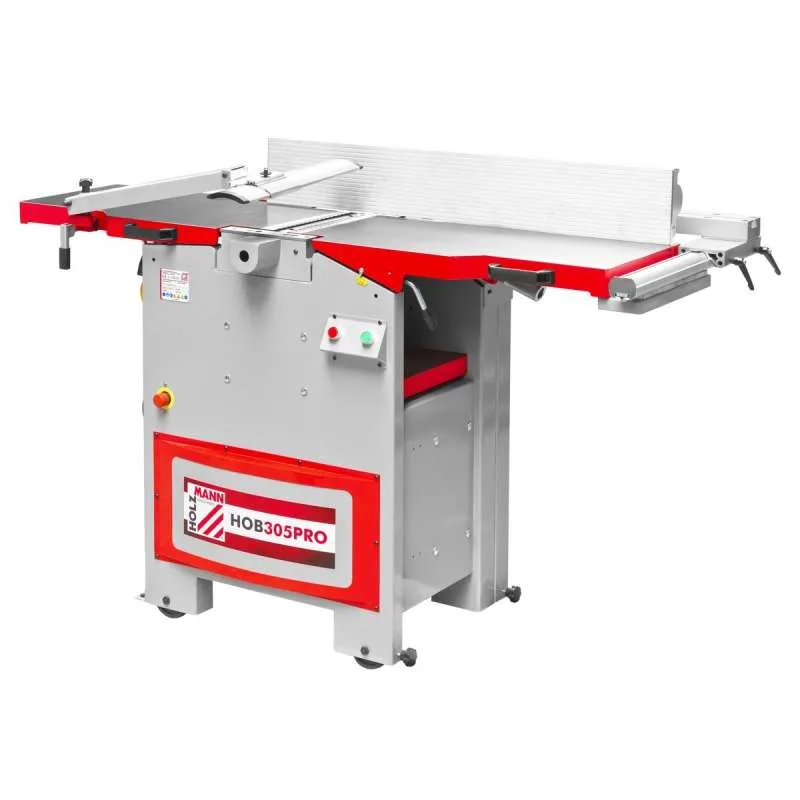
Jointers and planers:
- Hands caught by rotating irons
- Projection of chips and knots
- Intense noise (> 90 dB(A))
Spindle moulders and routers:
- Cutting by rotary tool
- Tool projection in case of breakage
- Violent rejection of the piece being worked on
Sanders and calibrators:
- Gripping by abrasive cylinders
- Particle projection
- Significant dust generation
2.2. Mandatory protective devices
The decree of March 5, 1993 defines the minimum technical requirements:
- Fixed protectors Complete enclosure of transmission components and hazardous parts inaccessible during work
- Mobile protectors Interlock devices prevent the machine from operating until the guard is closed.
- Sensitive protective devices Light curtains, tactile paving, easily accessible emergency stop devices
- Blade brake Mandatory on circular saws to reduce the blade's free-running time
2.3. Technological developments and new risks
The introduction of numerically controlled machines generates new risks:
- Automation of movements Risk of entanglement due to automatic movements unpredictable by the operator
- complex human-machine interface Risk of programming error that could generate dangerous movements
- Complex maintenance The need for interventions on electronic and computer systems by specialized personnel
- Cybersecurity Risk of hacking into control systems that could compromise operator safety
III. Physical risks: noise, vibrations and handling
3.1. Exposure to noise in workshops
Woodworking shops typically have high noise levels due to woodworking machinery:
Typical exposure levels:
- Circular saw: 90-105 dB(A)
- Jointer/planer: 85-95 dB(A)
- Spinning top: 80-90 dB(A)
- Central vacuum system: 75-85 dB(A)
Regulatory obligations (Articles R. 4431-1 et seq. of the French Labour Code):
- Exposure values triggering action: LEX,8h = 80 dB(A) and LpC,peak = 135 dB(C)
- Exposure limit values: LEX,8h = 87 dB(A) and LpC,peak = 140 dB(C)
- Risk assessment and mandatory prevention measures from 80 dB(A)
Preventive measures:
- Noise reduction at the source (noisier machines, preventive maintenance)
- Acoustic treatment of premises (absorption, insulation)
- Personal protective equipment (earplugs, noise-canceling headphones)
- Work organization (job rotation, limiting exposure times)
3.2. Mechanical Vibrations
Portable tools used in woodworking generate vibrations that are transmitted to the hand-arm system:
Tools involved and levels of exposure:
- Orbital sanders: 2-8 m/s²
- Routers: 3-10 m/s²
- Jigsaws: 4-12 m/s²
- Belt sanders: 5-15 m/s²
Regulatory limit values (Article R. 4441-1 of the French Labour Code):
- Action trigger value: 2.5 m/s² over 8 hours
- Exposure limit value: 5 m/s² over 8 hours
Prevention of hand-arm vibration syndrome:
- Choosing low-vibration tools
- Preventive maintenance (balancing, condition of blades and cutters)
- Limiting usage time
- User information and training
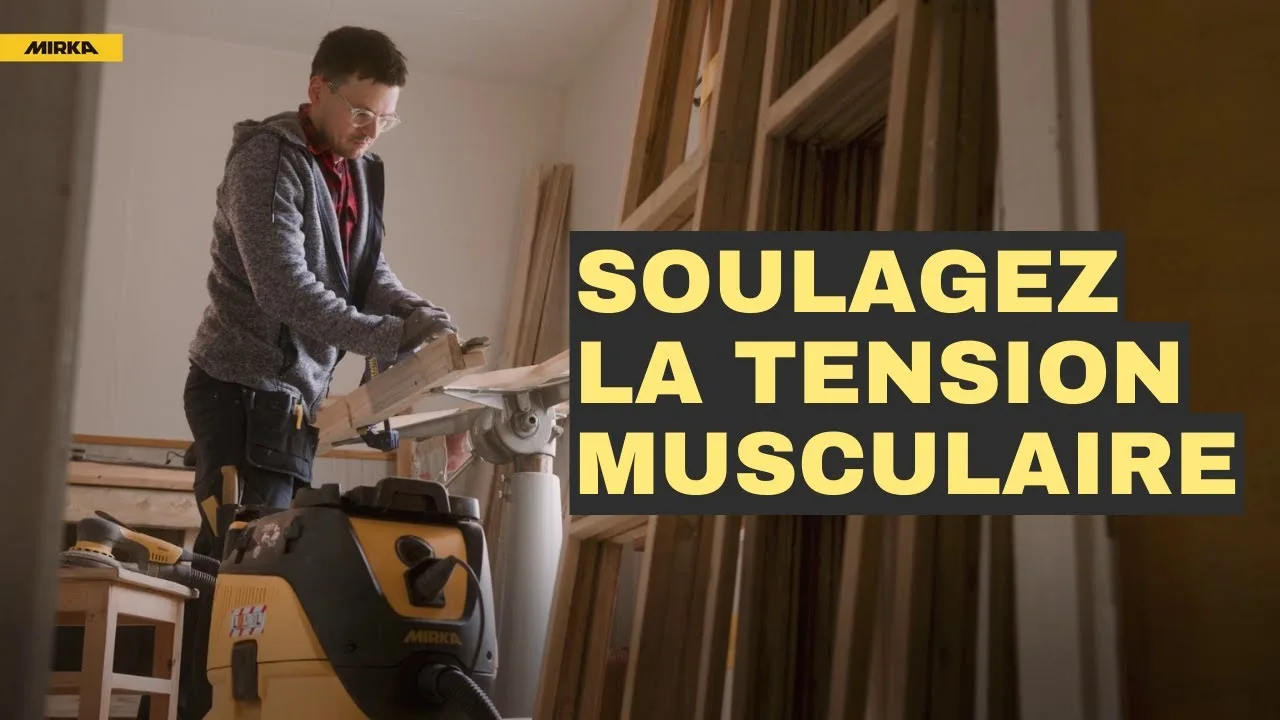
3.3. Musculoskeletal disorders and manual handling
Manual handling is ubiquitous in joinery workshops and constitutes a major source of musculoskeletal disorders (MSDs):
Risky situations:
- Handling of large panels (up to 50 kg)
- Loading/unloading machines
- High-level or ground-level storage
- Awkward postures during assembly
Regulatory obligations (Articles R. 4541-1 et seq. of the French Labour Code):
- Risk assessment related to manual handling
- Information and training for workers
- Enhanced medical monitoring if necessary
Preventive measures:
- Mechanization of handling operations (overhead cranes, suction cups, conveyors)
- Workstation setup (adjustable height, mobile supports)
- Training in proper movements and postures
- Work organization (rotation, breaks, teamwork)
IV. Chemical risks: wood dust and hazardous substances
4.1. Wood dust and CMR classification
Wood dust has a regulatory occupational exposure limit (OEL) of 1 mg/m³ over 8 hours, verified annually by an accredited body.
Classification and obligations:
- Classified as category 1 carcinogens according to the CLP regulation
- Enhanced evaluation of articles R. 4412-61 et seq. of the Labour Code
- Mandatory search for alternative solutions (machines with integrated suction)
- Enhanced medical monitoring prior to assignment to the position
- Maintaining a list of exposed workers with the duration of exposure
4.2. Processing and finishing chemicals
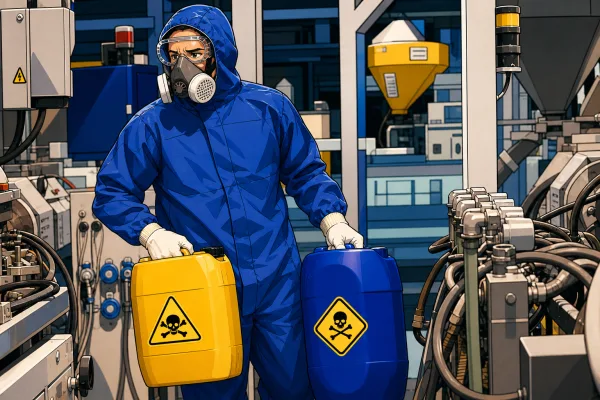
- Organic solvents : present in varnishes, stains and thinners causing skin irritation, narcotic effects and fire hazards
- Formaldehyde : emitted by particleboard, classified as carcinogenic 1B with an occupational exposure limit of 0.3 ppm requiring controls and substitution measures
- Isocyanates : in polyurethane varnishes and adhesives causing respiratory sensitization with very low OELs (0.02 mg/m³ for TDI)
- Treatment products : fungicides and insecticides containing CMR substances
4.3. Prevention and protection measures
- Ventilation and suction : emission capture, regular maintenance
- Protective equipment FFP3 masks, chemical gloves, protective clothing
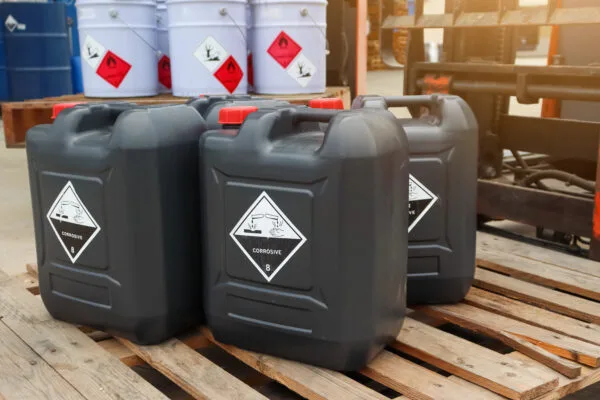
- Secure storage : ventilated cabinets, separation of incompatible products
- Labeling compliant to the CLP regulation
V. Focus ATEX: risks of wood dust explosion
5.1. Explosive characteristics of wood dust
Dust clouds can form during woodworking (sanding, sawing, grinding, drilling, etc.). The lower explosive limit (LEL) of wood dust is generally accepted to be 30 to 40 g/m³, for an average explosion violence index (Kst) of 200 bars ms⁻¹.
Wood dust exhibits varying explosive characteristics depending on:
- The essence of wood Softwoods (fir, spruce) generally exhibit higher explosiveness than hardwoods (oak, beech)
- Particle size The finer the particles (< 500 μm), the higher the risk of explosion.
- The humidity level Dry dust (< 10 % moisture content) presents the greatest risk.
- The conditions of confinement Enclosed spaces (dust collectors, silos, suction ducts) increase the risk of explosion
5.2. ATEX Regulatory Obligations
The ATEX Directive 2014/34/EU (equipment) and the ATEX Directive 1999/92/EC (workplaces), transposed respectively into Articles R. 4227-42 et seq. of the French Labour Code, require:
Explosion risk assessment: The employer must specifically assess the risks of explosion and classify areas according to their probability of the presence of explosive atmospheres:
- Zone 20 : Permanent or frequent presence of dust clouds
- Zone 21 Occasional dust clouds may occur.
- Zone 22 Rare and short-lived occurrence of dust clouds
Explosion protection document: Establishment of a specific DPCE, separate from the DUERP, identifying ATEX zones and prevention measures.
ATEX equipment: Use of ATEX certified equipment in classified areas (electrical equipment, vacuum cleaners, lighting).
Organizational measures: Staff training on ATEX risks, cleaning procedures, prohibition of ignition sources.
5.3. Specific prevention measures
- Source capture Installation of localized dust extraction systems on each dust-generating machine
- General ventilation Maintaining sufficient airflow to prevent the accumulation of suspended dust
- Regular cleaning Implementation of daily cleaning procedures to prevent the accumulation of dust deposits
- Separation of ignition sources : Keep away from welding stations, grinding machines, and equipment likely to generate sparks
VI. Sector-specific psychosocial risks
6.1. Time pressure and customer relations
Deadline pressure:
- Strict contractual commitments with late payment penalties
- Load variability depending on orders
- Seasonal peaks
Complex customer relationship:
- High and subjective aesthetic standards
- Modifications in progress
- Direct liability in case of non-compliance
Safety implications:
- Tendency to accelerate the pace
- Neglecting protective procedures to save time
- Stress promotes errors
6.2. Versatility and technological evolution
Versatility required:
- Proficiency in multiple techniques (machining, assembly, finishing)
- Knowledge of many machines
- Continuous adaptation to customer specifications
Skills obsolescence:
- Rapid evolution of CN technologies
- Continuing education required
- Generational gap in technology adoption
Mental workload:
- Memorizing procedures
- Constant vigilance
- Quick decision-making
6.3. Working conditions and environment
Work environment:
- Constant noise from the machines (hearing fatigue)
- Dust and chemical odors
- Seasonal temperature variations
Work organization:
- Work generally involves standing and walking.
- Hours vary depending on orders
- Isolation is possible in small structures
Prevention measures for psychosocial risks:
- Assessment of psychosocial risk factors
- Improvement of work organization
- Workstation layout
- Skills development
VII. Emerging risks: digitalization and new materials
7.1. Numerically controlled machines and robotics
Specific risks associated with CNC machines:
- Automatic movements that are unpredictable for the operator
- Extensive and variable danger zones
- Complexity of walking modes
- Dependence on computer systems
Enhanced security requirements:
- In-depth risk analysis
- Appropriate protective devices
- Specialized training
- Backup procedures
Collaborative robotics (cobots):
- Human-robot interaction risk assessment
- Force and speed limitations
- Specific training for co-activity
7.2. New composite materials and modified wood
- thermally modified wood : potentially more irritating dust, altered combustion properties, possible emissions of volatile organic compounds
- Wood-plastic composites (WPC) : release of plastic fumes during machining, chemical risks related to additives, high melting temperatures
- Next generation technical panels Variable formaldehyde emissions, new binders (MDI, bio-based resins) with poorly understood effects, potential sensitization to new substances
- Prevention strategies : monitoring safety data sheets, adapting extraction systems, ongoing training, collaboration with suppliers
7.3. Artificial intelligence and predictive maintenance
Predictive maintenance:
- Risks of over-reliance on algorithms
- The need to maintain parallel human expertise
- Technical team training
Optimizing workflows:
- Complex interactions between automated systems
- Risk of error in case of algorithm malfunction
- Need for manual emergency procedures
VIII. Legal liability and case law
8.1. Employer's criminal liability
The employer may be subject to prosecution under several legal classifications:
Homicide or unintentional injury (Articles 221-6 and 222-19 of the Penal Code):
- Lack of machine safety training
- Absence of protective devices or their neutralization
- Failure to comply with maintenance and inspection procedures
Deliberate endangerment (Article 223-1 of the Penal Code):
- Knowingly using non-compliant equipment
- Non-compliance with wood dust occupational exposure limits despite checks revealing exceedances
- Deliberate absence of collective protective equipment
8.2. Employer's inexcusable fault
Gross negligence corresponds to a "failure to meet the obligation of safety of result." In the joinery sector, it characterizes:
- Lack of specialized training : lack of appropriate training on dangerous machinery
- Faulty equipment : machines without protective devices or neutralized guards
- Exposure to carcinogenic dust : non-compliance with occupational exposure limits (OELs) in the absence of effective extraction systems
8.3. Liability for non-compliant equipment
Machines manufactured before 1997:
- They must comply with the minimum requirements of the decree of March 5, 1993
- Need for conformity assessment
- Implementation of the necessary adaptations
- Staff training on specific requirements
Equipment modifications: Any substantial change makes the employer responsible for overall compliance.
Shared responsibility: Between employer (training, organization, maintenance), employee (compliance with instructions) and manufacturer (design flaw, lack of information).
8.4. Recent Case Law Developments
- Enhanced obligation of result in terms of security
- In-depth technical expertise to assess compliance
- Consideration of existing safer technical solutions
IX. Shared Responsibilities and Safety Culture
9.1. Responsibilities of employees and managers
Employee obligations (Article L. 4122-1 of the French Labour Code):
- Taking care of their safety and that of their colleagues
- Follow safety instructions and use PPE correctly
- Report dangerous situations and equipment defects
- Do not obstruct the operation of safety devices
Employee criminal liability: In the event of an accident caused by the deliberate failure to comply with safety instructions, the employee may be prosecuted for involuntary injury (Article 222-19 of the Penal Code) or endangering others if his actions directly expose his colleagues.
Responsibility of middle management:
- Monitoring compliance with safety instructions
- Practical training for new arrivals
- Maintenance of equipment in their sector
- Reporting of malfunctions
9.2. Developing a safety culture
Communication and awareness-raising:
- Regular safety meetings with feedback from the field
- Display and visual communication adapted to the sector
- Lessons learned from accidents and near misses
- Promoting good practices and security initiatives
Employee participation:
- Integration into risk assessment and definition of measures
- Consultation on security investments
- Training of safety liaisons from among experienced employees
- Encouragement to proactively report dangerous situations
Training and mentorship:
- Transmission of knowledge by elders
- Mentoring of young and newly hired employees
- Cross-training to develop secure versatility
- Supervised practice-based learning
11.3. Security Management
Management commitment:
- Formalized and communicated security policy
- Financial and human resources dedicated to prevention
- Exemplary leadership in respecting the rules
- Balanced recognition and sanctions
Organization and responsibilities:
- Clear definition of security roles
- Integrating safety into work organization
- Coordination with external companies
- Emergency management and contingency plans
Conclusion
Risk assessment in wood joinery is a complex challenge that requires a rigorous methodological approach that takes into account the diversity of risks present in these workshops.
From the traditional circular saw to the most sophisticated CNC machines, via new composite materials and innovative finishing products, each technological development brings its share of new safety challenges.
The convergence between the general obligations of the Labour Code, the specific requirements of the Machinery Directive, the reinforced occupational exposure limits for wood dust, and the ATEX regulations concerning explosive atmospheres, outlines a dense and demanding regulatory framework.
Employers can no longer be satisfied with an intuitive approach to safety but must develop genuine expertise in occupational risk assessment.
The emergence of psychosocial risks linked to time pressure, the required versatility and constant technological evolution, as well as increasingly strict case law regarding employer liability, make a comprehensive and proactive approach to prevention essential.
For MD Conseil formation, support from specialized experts, continuous training of teams, and the implementation of a continuous improvement approach based on feedback, appear more than ever as essential investments for any manager concerned with reconciling artisanal tradition and modern requirements of safety and performance.