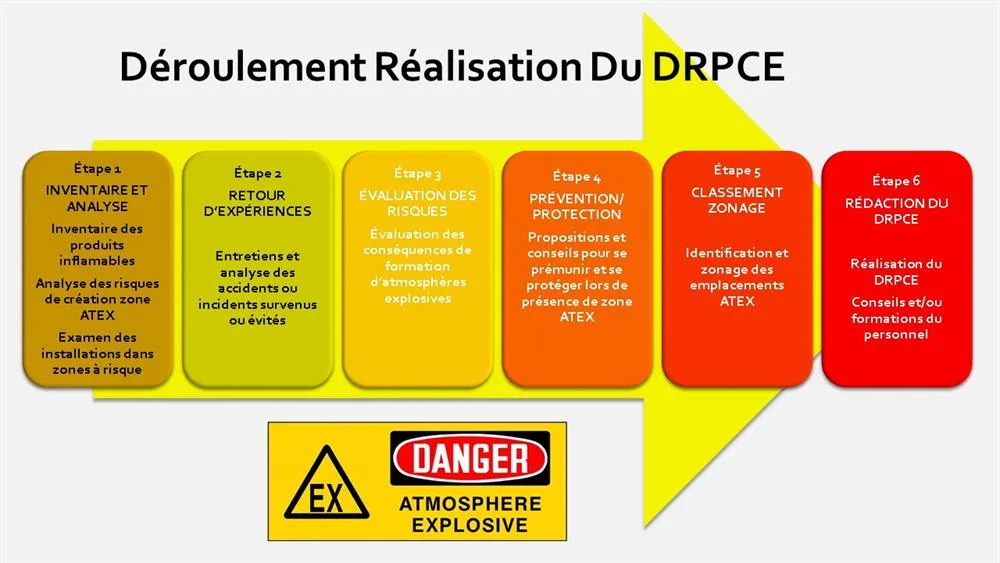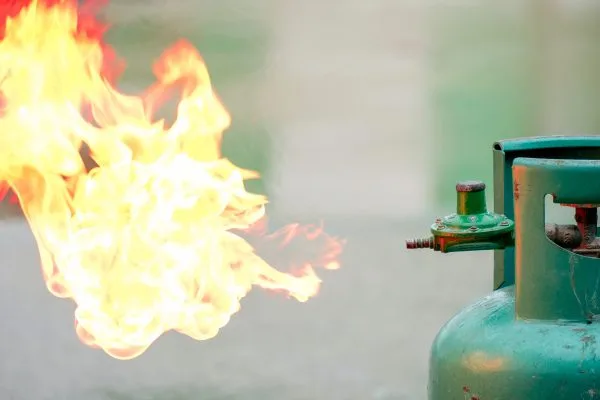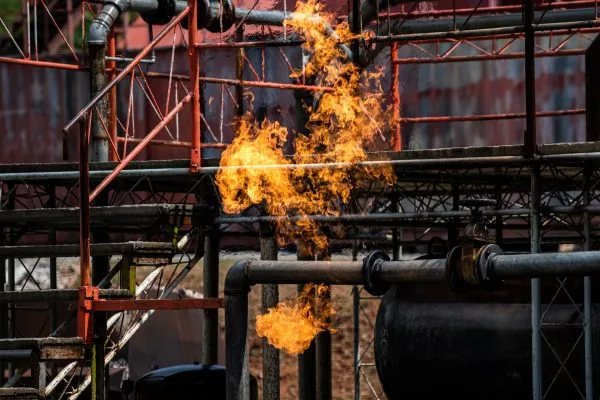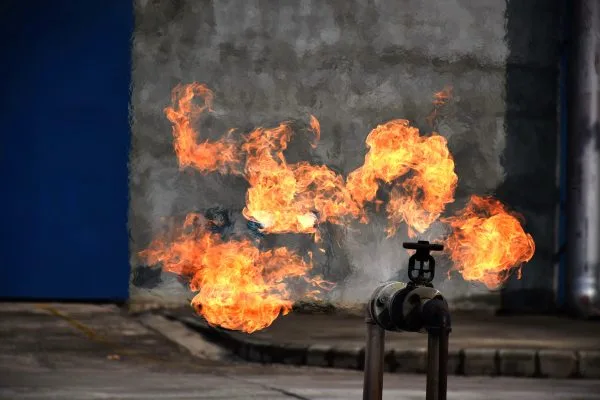



Risk assessment is the first step in the prevention process. The results of this assessment must be recorded in the document relating to protection against explosions (DRPCE), which is integrated into the single document for the assessment of occupational risks.
The general principle of explosion risk prevention aims first to prevent an explosion from occurring and, if it does occur, to limit its effects.

What the DRPCE should contain
- explosion risks identified, assessed and updated
- the appropriate measures taken or to be taken to achieve regulatory objectives
- the validation and monitoring of these measures (effectiveness, sustainability, residual risks…)
- The locations are classified into zones (with their volumes).
- the locations to which the regulatory requirements apply
- assurance that workplaces and equipment are designed, used and maintained with safety in mind
- the procedures to be applied and written instructions to be established before the work is carried out
- the content of the training courses for the employees concerned
How to assess the risk of explosion
Conduct a product inventory
This first step involves taking inventory of combustible products, specifically identifying:
- their nature and state of division: solid, fluid, gas, mist, powder; ;
- their physicochemical characteristics
Following this inventory, the following must be recorded:
- the quantities used at all stages: processes, storage, handling, transfer…
- Storage conditions: location, immediate environment, temperature…
Analyze the implementation processes
The normal operation of the installations must be described by collecting all relevant data. From this description, it is important to consider the products used, temperature and pressure conditions, exothermic reactions, decomposition products, cooling conditions, ventilation systems, etc.
Each installation (silo, crusher, dust collection circuit, transfer circuit, mixer, unloading system…) and workstation (loading station, storage station, mixing station…) must be the subject of a study which will take into account the different operating conditions (closed systems, confined enclosures, unloading station by plunging lance…).
Investigate potential malfunctions
The types of malfunctions that can reasonably be foreseen must be taken into account, such as: the shutdown of the ventilation or cooling system, product leaks, particularly at flanges and fittings, foreseeable breakdowns, interruptions in product supply…
The feedback from the company or branch of activity can help to highlight malfunctions such as: instructions that are not applicable (especially in the event of an anomaly) or not actually applied, incidents during operation or during shutdown or restart phases, a theoretical production process that cannot be respected given the demands and constraints (travel, ancillary tasks that take longer than the main task, etc.).
Classifying hazardous locations (zoning)
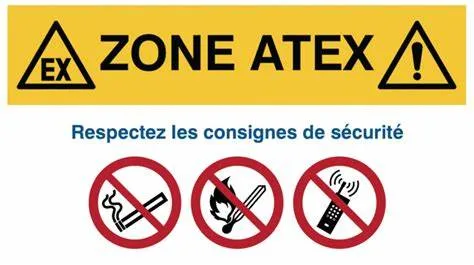
Locations where an ATEX may be present are classified as risk zones according to the nature of the combustible product, the frequency and duration of presence of the explosive atmosphere considered.
| Area | Description | Typical example |
|---|---|---|
| Flammable gases, vapors or mists | ||
| Zone 0 | Explosive atmosphere present continuously or for long periods | Interior of a tank containing a flammable solvent |
| Zone 1 | Explosive atmosphere that may occasionally form during normal operation | Proximity to a fuel filler valve |
| Zone 2 | An explosive atmosphere is unlikely to form, and if it does, it is only briefly. | Areas near accidental leaks are being monitored. |
| Combustible dust | ||
| Zone 20 | Explosive atmosphere present permanently or frequently in the form of a cloud of combustible dust | Interior of a silo or dust filter |
| Zone 21 | Explosive atmosphere that may occasionally form during normal operation | Environment near a flour conveyor |
| Zone 22 | An explosive atmosphere is unlikely to form, and if it does, it is only briefly. | Dust deposits around factory equipment |
Identify the sources of inflammation
The sources of ignition are numerous. They are all detailed in the NF EN 1127-1 standard.
Assessing the severity of an explosion
The severity of an explosion must be assessed based on factors such as the presence of personnel, the size of the ATEX zone, and the explosion protection of the installations. It will also be relevant to consider the risk of the explosion spreading, for example, to a storage area, which could lead to a secondary explosion or fire. Following this assessment, prevention and protection measures must be implemented.
Research into prevention and protection measures
The search for prevention and protection measures focuses, firstly, on preventing the formation of an explosive atmosphere, then on preventing its ignition and finally on limiting the effects of an explosion by putting in place protection systems, in order to protect the health and safety of employees.
The implementation of preventive, technical and organizational measures, subject to their sustainability, is recorded in an action plan and will allow for the definition of a potentially less restrictive zoning.
It is recommended that all internal, and even external (ATEX-certified experts from CNPP or INERIS), expertise be involved in drafting this document. The DRPCE is finalized under the employer's responsibility and submitted to employee representative bodies (CSE, etc.) for their opinion.