


Why is this risk critical for the employer?
The Labor Code requires employers to guarantee the safety and protect the physical and mental health of their employees. This implies not only securing machinery (enclosures, emergency stops, CE conformity), but also ensuring that operators are competent, trained, and, where necessary, authorized to use them.
Even a compliant machine remains dangerous if it is misused.
What situations require training or accreditation?
- Use of industrial machinery (presses, saws, machine tools, automated lines)
- Maintenance or adjustment interventions (energy lockout/tagout)
- Operation of specific equipment (lifting equipment, forklifts, aerial work platforms – with CACES certification or internal authorization)
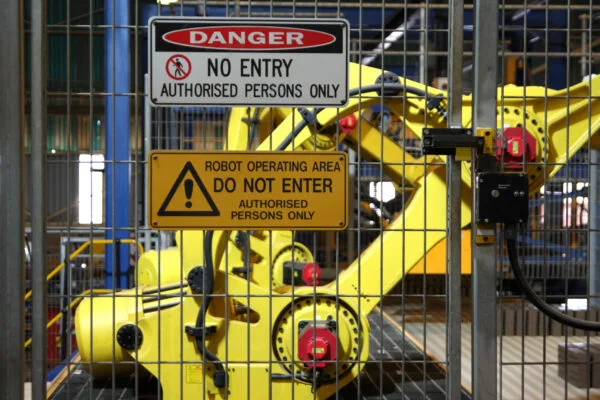
- Work involving exposure to particular risks (high inertia machines, automated systems, robotics)
In some cases, formal authorization is required (e.g., electrical), in others, a driving or work permit issued by the employer based on acquired skills.
What are the employer's obligations?
The employer must structure their approach around several pillars:
- Risk assessment in the DUERP: identification of hazardous situations related to machinery
- Training tailored to the job: normal operation, degraded situations, safety instructions
- Skills verification: practical assessment, periodic refresher training
- Issuance of formalized authorizations or permits
- Provision of clear procedures: operating methods, lockout/tagout, energy lockout/tagout (LOTO)
- Equipment maintenance and compliance
Training should not be seen as a formality, but as an operational lever for prevention.
What are the risks in case of failure to comply?
A lack of training or authorization can make the employer liable in the event of an accident. The consequences are numerous:
- Serious or even fatal accidents
- Production shutdowns
- Administrative and criminal sanctions
- Deterioration of the social climate and the company's image
In summary
Training and equipping employees to handle machine-related risks is a regulatory requirement, but above all, an essential condition for preventing accidents. A safe machine + a trained operator = real risk management.
Do you want to secure the use of your equipment and structure your internal authorizations? Our training courses support you in developing the skills of your teams and bringing your practices into compliance.