


The traceability of health and safety training is an old issue… and a still fragile one. Many companies have scattered data: local tables, paper certificates, poorly documented internal training, and unharmonized certifications.
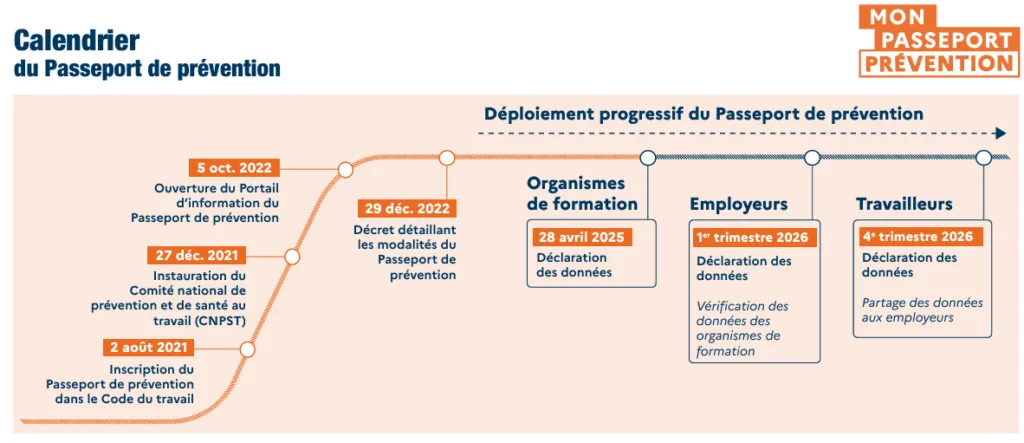
Training organisations already declare certain SST training courses, and employers will have access to their space from March 16, 2026 to declare in particular eligible training courses provided internally and to check the declarations.
To turn this into an opportunity, the first step is to clarify internal governance: who owns the training data? HR? HSE? Both? Who validates the reference data (list of training courses, categories, validity rules)? Who is responsible for the quality of the declarations for internal training? Without governance, the Passport will not correct the fragmentation: it will simply make it more visible.
The second step is to streamline the reference framework. In many companies, training courses, awareness sessions, certifications, authorizations, and briefings are all mixed together. The Passport encourages a clearer distinction between what truly constitutes eligible occupational health and safety training and a structured approach to what needs to be documented. This work, when done properly, is already beneficial: it reduces confusion and improves the ability to demonstrate compliance.
The third step is managerial: using traceability for oversight. Once we know which occupational health and safety (OHS) skills exist and when they expire, we can plan better, avoid gaps in certification, secure subcontracting and concurrent activities, and reduce the risk of exposure. Here, the Health and Safety Passport becomes a prevention tool, not a paper-based HR tool.

Finally, we must not forget acceptability: training data affects people. Therefore, deployment must be supported, explained, and integrated into simple processes.
Conclusion
The opening of the employer portal on March 16, 2026 is a milestone. Companies that take advantage of this to structure their governance, standards, and management will transform an obligation into a lever for HSE control — and a time-saver during audits and inspections.