


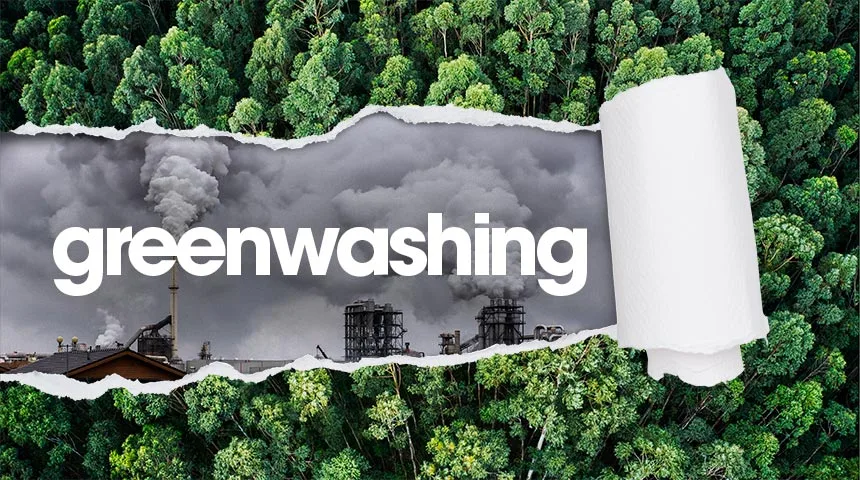
Greenwashing is no longer just a reputational risk. It has become a legal risk, a commercial risk, and an internal risk. Legal, because the requirements for environmental claims are becoming stricter and authorities, NGOs, and competitors are more readily challenging vague messages. Commercial, because customers (B2B and B2C alike) are demanding increasingly structured evidence. Internal, finally, because overly "green" communication in the face of an imperfect reality on the ground destroys employee trust: they see the discrepancy, and they don't forget.
Most missteps don't stem from a desire to deceive. They arise from a very human mechanism: the desire to simplify, to enhance, to "make an impression." And in this quest for clarity, nuances are glossed over… until a line is crossed. The challenge, therefore, is not to stop communicating. The challenge is to communicate as effectively as one manages an HSE (Health, Safety, and Environment) system: with a clear scope, evidence, boundaries, and a logic of continuous improvement.
The first rule of credible communication is to make the scope explicit. Environmental action always has boundaries: which sites? which activities? over what period? based on what assumptions? When a company announces a "30% reduction," the first question isn't "well done," it's: "30% of what, within what scope, and compared to what starting point?" Greenwashing often begins when these elements are not made clear and the public fills in the gaps with its own assumptions.
The second rule is the hierarchy of evidence. Solid communication relies on traceable elements: measurements, invoices, financial statements, known methodologies, audits, and controls. Conversely, weak communication is based on vague claims («responsible,» «ecological,» «sustainable») that say nothing verifiable. In industry, the most credible organizations speak little… but show their trajectories, their indicators, their action plans, and sometimes even their difficulties. This choice may seem risky, but it is extremely protective: it prevents accusations of concealment and strengthens trust.
The third rule is to distinguish between a result and a means. Planting trees, funding a project, buying certificates: these are means, not direct results on your own carbon footprint. Claiming "we are carbon neutral" without explaining the reduction process and the actual amount of offsetting is a high-risk area. Robust communication first describes the reduction: what was reduced, how, with what investments, and what trade-offs were made. Then, if there is offsetting or a contribution, it is clearly identified as a supplement, never presented as a shortcut.

The fourth rule is to avoid the "halo effect." This is one of the most classic mechanisms of greenwashing: a positive action is taken on one issue, and then it's implied that the entire company is "green." However, an organization can be excellent at recycling but weak on energy, or very advanced on energy but vulnerable on certain purchases. Credibility requires remaining proportionate: highlighting what is real, without making sweeping generalizations.
Companies that avoid greenwashing have a simple process: before publication, sensitive messages go through cross-validation between communication, experts (HSE, environment, quality, CSR) and sometimes legal.
Ultimately, fighting greenwashing means adopting a more mature approach: communicating less like a slogan and more like a dashboard. It means stating what you're doing, where you are in the process, and what remains to be done. This approach doesn't make communication less appealing; it makes it more robust. And today, robustness is the new key to success.