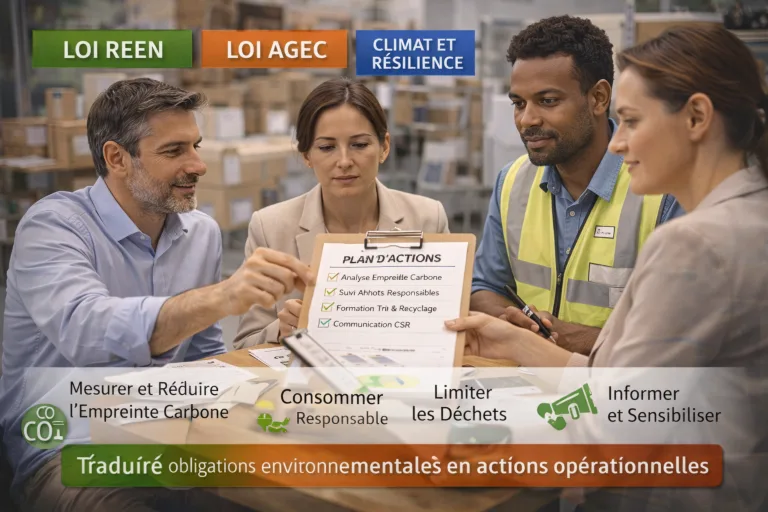



The ecological transition isn't a CSR project on the sidelines of business. It's a transformation of professions: purchasing, maintenance, logistics, design, production, IT, HR… everyone is involved. And skills become the key: without upskilling, your climate/resource objectives will remain just intentions.
The problem is that many companies approach the subject with useful but insufficient "catalogue" training courses (climate awareness, murals, etc.). A robust sustainable skills plan is more like an industrial strategy: it starts with the activities, the risks, the requirements, and then builds a roadmap.
Start with the most operational question: "What changes in the actual work?"«
Before discussing training, ask three practical questions:
- What tasks will disappear (or decrease)?
- What tasks will appear (impact measurement, source separation, traceability, supplier audits, eco-design, digital sobriety, etc.)?
- What tasks will to become more complex (regulations, reporting, customer requirements, data quality)?
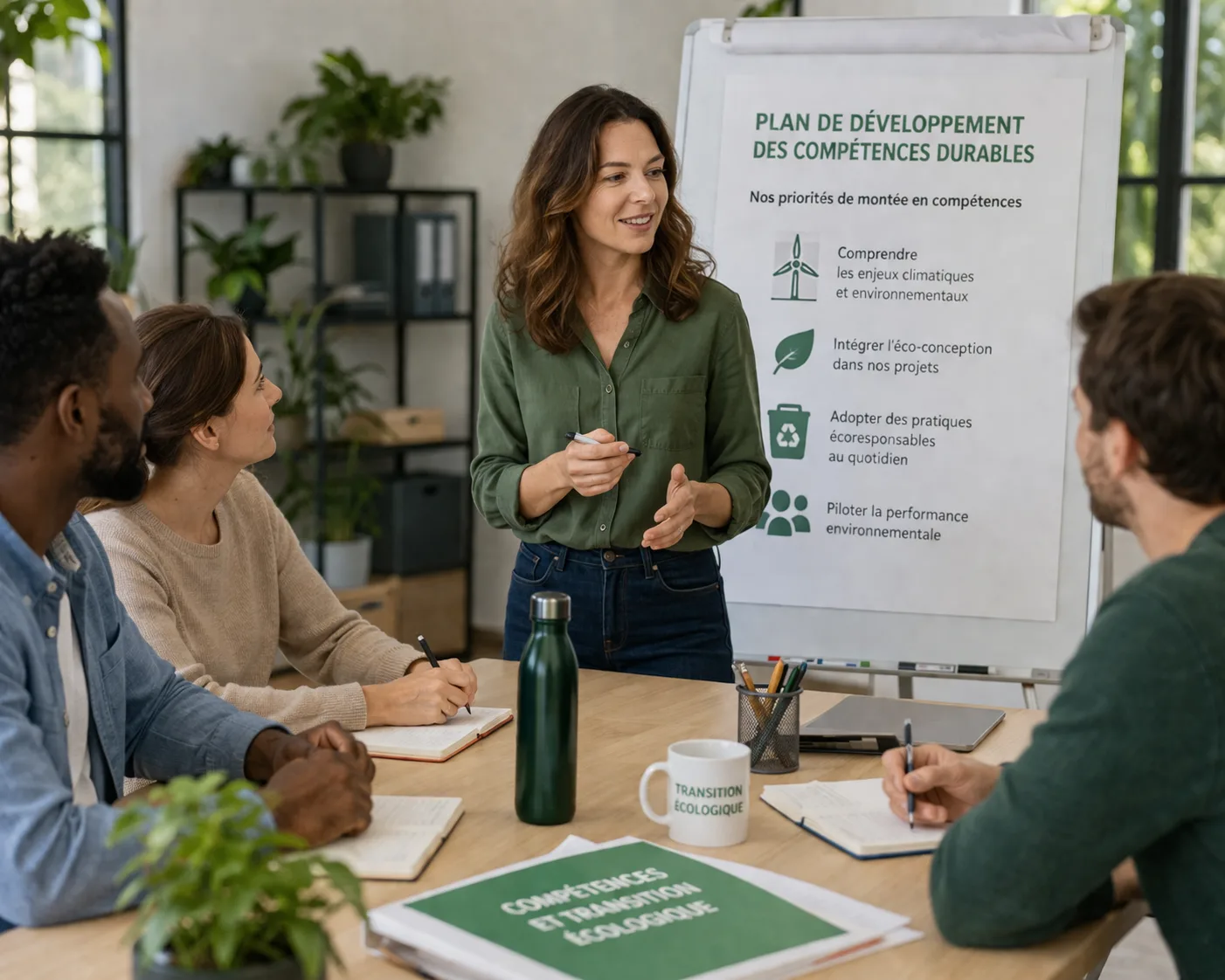
A "sustainable" plan rests on three pillars: compliance – performance – commitment
- Compliance skills: understanding key requirements (waste, substances, purchasing, reporting, safety, etc.) and knowing how to translate them into procedures.
- Performance skills: reducing energy, material, waste, optimizing flows, choosing the right indicators, ensuring data reliability.
- Engagement skills: leading change, getting teams on board, facilitating workshops, arbitrating without greenwashing.
Building a "sustainable skills matrix" (without overcomplicating things)
Take 10 to 15 cross-functional skills (e.g. life cycle analysis, responsible purchasing, waste management, eco-design, energy, environmental data, chemical risks, change management…) and cross-reference them with your professional families.
- Level 1: Know / Apply
- Level 2: Analyze / Improve
- Level 3: Piloting / Refereeing
Don't forget the HSE angle: the transition also creates risks.
Changing processes, introducing new materials, increasing recycling, modifying workflows… can create risks (chemical, fire, co-activity, musculoskeletal disorders, heat, etc.). A robust sustainable skills plan therefore includes an HSE (Health, Safety, and Environment) perspective from the design stage: this is essential to avoid a «dangerous transition.».
Measuring effectiveness by means other than "training hours"«
- reduction of waste, energy, and environmental incidents
- improved data quality (fewer errors, better traceability)
- reduction of supplier non-conformities
- improved mastery of critical positions