


Why is communication a key issue in occupational health and safety?
An accident is rarely due to a single technical cause. It often results from a chain of factors, including communication failures: poorly understood instructions, no feedback from the field, lack of coordination.
For the employer, structuring OHS communication means fulfilling their prevention obligation by ensuring that critical information is disseminated, understood and applied.
What is the role of line managers?
Managers play a central role in disseminating a safety culture. They are the operational link between management and field teams.
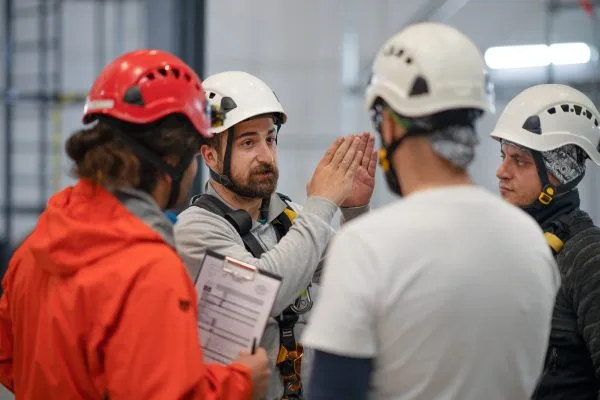
Implementing safety briefings (or safety talks) is a particularly effective tool, provided that managers are trained to lead them:
- Prepare a clear message tailored to the situation
- Encourage dialogue rather than a top-down approach.
- Sharing lessons learned (near misses, dangerous situations)
- Encourage team participation
A successful quarter-hour of safety briefing is not a formality: it is a moment of exchange that strengthens collective vigilance.
Why develop a structured internal communication system?
Effective OHS communication relies on varied and consistent channels:
- Displays and visual aids (instructions, indicators, prevention campaigns)
- Regular team meetings and briefings
- Internal digital tools (intranet, applications)
- Lessons learned and accident analyses shared
The objective is to maintain a constant level of attention to risks and to integrate safety into the daily lives of employees.
What role does cross-sectoral collaboration play in these exchanges?
Performance in occupational health and safety (OHS) relies on the ability to circulate information in both directions:
- Top-down: management defines the rules, priorities, and objectives
- Bottom-up: employees report risky situations, ideas for improvement, and early warning signs
This cross-functional approach is essential to avoid blind spots. It promotes team involvement and allows prevention measures to be adapted to the realities on the ground.
What are the employer's obligations?
The employer must:
- Inform and train employees about the risks to which they are exposed
- Provide clear and understandable instructions
- Involve staff representatives and teams in the prevention process
- Integrate communication into the DUERP and the associated action plan
A failure of communication can be considered a breach of the obligation of safety.
In summary
Effective communication in health and safety means creating the conditions for a dynamic and shared approach to prevention. This requires trained managers, regular exchanges, and genuinely listening to what's happening on the ground.
Do you want to structure your health and safety communication practices and train your managers to lead safety briefings? Our training courses will help you strengthen your teams' commitment and permanently embed a safety culture in your organization.