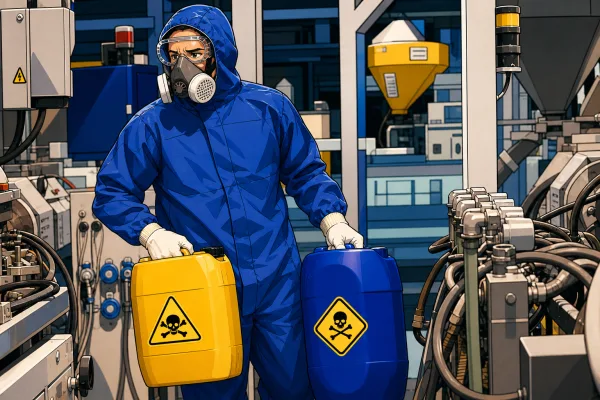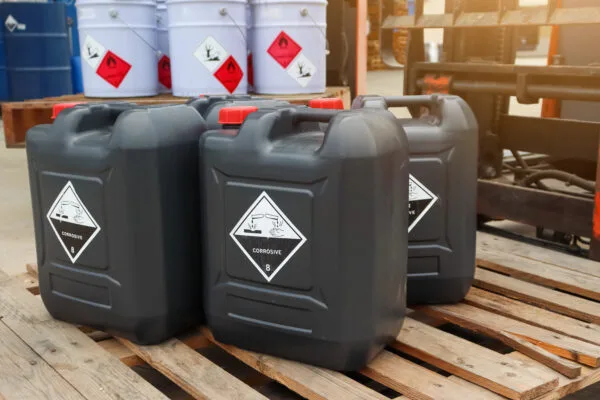



Chemical risk is a major issue in occupational health and safety. It concerns the exposure of employees to substances that can be dangerous to their health, including toxic, carcinogenic, or irritating agents.
In this context, training and informing workers is not optional: it is a regulatory obligation for the employer. The Labor Code mandates that all individuals likely to be exposed to these risks be made aware of and trained.
According to article R4412-87, the employer must organize, in conjunction with staff representatives and the occupational health service, information and training actions adapted to the chemical hazards present in the company.
What does chemical risk training cover?
Chemical risk training aims to provide employees with the necessary knowledge to work safely. It covers, in particular, the potential health effects of hazardous substances, best practices for limiting exposure, and hygiene rules to be followed.
It also includes the use of personal protective equipment, procedures to follow in case of an incident, and behaviors to adopt to prevent risky situations, particularly for intervention teams.
Stricter regulations in certain sectors
In addition to the Labor Code, certain industries, particularly chemicals and petrochemicals, are subject to specific requirements. For example, the French Chemical Industries Union (UIC) regulates the conditions under which external companies can work on sensitive sites, such as Seveso high-threshold classified facilities.
In this context, external contractors must be trained and certified according to specific standards. Training programs must meet recognized specifications in order to be validated by the user companies.
This requirement reinforces the importance of chemical risk training, both to meet regulatory obligations and to ensure a high level of safety on industrial sites.
The different levels of authorization
Chemical risk clearance is divided into two distinct levels.
Level 0, called initiation, is mainly intended for non-interventionists who nevertheless need a basic understanding of the subject (purchasing, administration, security post, etc.)
Level 1 is primarily intended for operators and personnel exposed to chemicals as part of their duties. Level 2, on the other hand, concerns supervisors, team leaders, or those who sign safety-related documents.
Validity period and training
The certifications have a limited validity period. Level 1 is valid for three years, while level 2 must be renewed every four years.
In terms of training, acquiring level 1 generally requires one day, while level 2 requires more in-depth training, over a period of two days.
Train with MD Conseil Formation
Training in chemical risk is essential to prevent accidents, protect employee health and comply with legal obligations.
MD Conseil Formation supports companies and professionals in obtaining these qualifications, by offering training courses that comply with regulatory requirements and are adapted to the realities of the field.
Training your teams means not only meeting the obligations of the Labor Code, but also sustainably strengthening safety and risk management within the company.