


Fire safety in public buildings (ERP) and high-rise buildings (IGH) is a major public health issue and employer responsibility.
I. The general regulatory framework for fire safety patrols
Regulatory sources: Building Code and regulations for public access buildings (ERP) and high-rise buildings (IGH).
The obligation to organize fire safety rounds has its main source in the Building and Housing Code (CCH), in particular in the decree of June 25, 1980 approving the general provisions of the safety regulations against fire and panic risks in public buildings.
Articles GE 5 and GE 6 of this regulation require operators to maintain a permanent monitoring service adapted to the nature of the operation and the risks presented.
This monitoring necessarily includes security rounds, the frequency and modalities of which are specified according to the category of the establishment.
For high-rise buildings, the specific safety regulations, established by the decree of December 30, 2011, specify in its articles GH 58 and GH 59 the particular obligations regarding surveillance and patrols, adapted to the specific characteristics of these high-rise buildings.
The obligations of the Labour Code
Article L. 4121-1 of the Labour Code requires the employer to take the necessary measures to ensure the safety and protect the physical and mental health of workers.
This general obligation translates, in terms of fire safety, into the implementation of appropriate prevention and monitoring measures.
Article R. 4227-39 of the Labour Code complements this system by specifying that the employer must organize in his establishment a fire monitoring service adapted to the nature of the operation and the importance of the risks.
II. Differentiation of obligations according to categories of establishments
Public access buildings (ERP) of categories 1 to 4
Public access buildings (ERP) in categories one to four (with a workforce exceeding 300 people for category 4) are subject to strict obligations regarding security patrols:
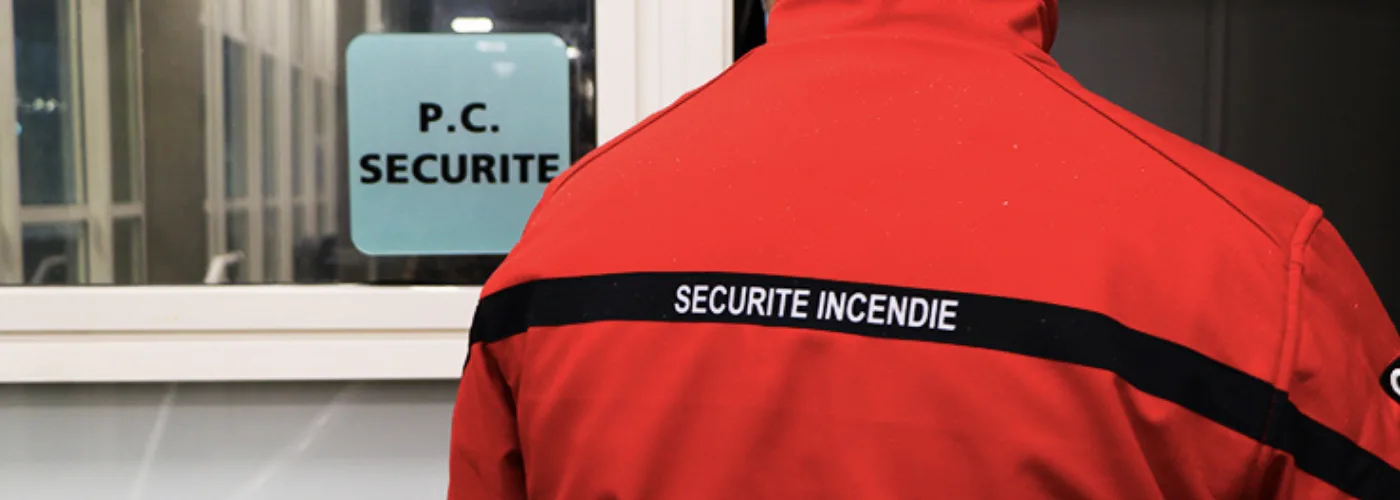
- These establishments must have a permanent fire safety service, provided by qualified SSIAP (Fire Safety and Assistance to Persons Service) personnel.
- Rounds must be carried out every hour during operating periods and at least every 3 hours outside of these periods.
- Each round must be accurately recorded, including the time, the identity of the agent, any anomalies observed, and the measures taken.
Category 5 public access buildings
A monitoring service must be organized, which can be provided by non-specialized staff but trained in safety instructions.
The frequency of patrols is determined based on the specific risks of the establishment, generally every 2 to 4 hours depending on the activity.
High-rise buildings (HGB)
The obligations vary according to the classes GHA (residential), GHO (hotels), GHR (educational), GHS (archive storage), GHU (sanitary), GHW1 and GHW2 (offices), GHZ (mixed).
All high-rise buildings must have a permanent 24/7 fire safety service, with SSIAP agents of an appropriate level according to the class of the building.
The patrols must cover all levels according to an established schedule, with particular attention to technical rooms and evacuation routes.
III. Sector-specific characteristics and adaptation of rounds
Healthcare facilities
Healthcare facilities have specific characteristics related to the presence of patients with reduced mobility and the use of sensitive medical equipment:
- Continuous rounds : Facilities receiving hospitalized patients must organize continuous monitoring with rounds at least every hour.
- Qualified personnel : Agents must be trained in the specifics of evacuating people with reduced mobility and the risks associated with medical equipment.
- Coordination : Rounds must be coordinated with care teams to avoid interference with medical activities.
Hotels and accommodation establishments
The hotel sector presents specific risks related to accommodating people unfamiliar with the premises:
- Enhanced nighttime surveillance : The rounds should be particularly frequent during sleeping hours (every hour between 10 p.m. and 6 a.m.).
- Issue verification Special attention must be paid to keeping exits clear and to emergency lighting.
- Staff training Reception staff must be trained in evacuation procedures and emergency instructions.
Shopping centers and malls
- Sector rounds The establishment must be divided into sectors with scheduled patrols for each zone.
- Coordination between tenants : The monitoring responsibilities must be clearly divided between the centre manager and the shop operators.
- Access monitoring Special attention must be paid to access points and emergency exits, which are often numerous in these establishments.
IV. Recent regulatory developments (2019-2024)
SSIAP training reform
- Enhanced prerequisites : A valid SST or PSE or a PSC 1 less than 2 years old is now mandatory to access SSIAP 1 training.
- Qualiopi Certification Training organizations must hold Qualiopi certification.
- Mandatory recycling Fire safety personnel are required to undergo refresher training in first aid every two years.
Modernization of traceability tools
- Electronic pointing systems : The use of RFID badges or chips to track patrols is becoming more widespread and accepted by security commissions.
- Integration with the SSI Fire safety systems (FSS) can now be interfaced with patrol management systems to optimize monitoring efficiency.
V. Interaction between patrols and automated systems
Complementarity with automated systems
Security patrols do not replace automated fire safety systems but are coordinated with them in a complementary manner:
- Automatic detection Automatic fire detection systems (ADDS) provide continuous monitoring of premises, but cannot detect all types of anomalies.
- Human intervention : Patrols allow for the detection of malfunctions in automatic equipment, anomalies in human behavior, and for preventive maintenance.
- Periodic verification : Patrolling officers must check that the security equipment is functioning correctly.
Alarm response protocols
- Dispute resolution The patrol officer must be able to quickly get to the scene of an alarm to carry out a verification.
- Graduated procedures Depending on the nature of the anomaly detected, the agent must apply graduated procedures ranging from simple recording to alerting the emergency services.
VI. Practical recommendations for implementation
Define the frequency and patrol routes
- Risk assessment : The frequency of patrols must be determined by an assessment of the risks specific to the establishment, taking into account the activity, the configuration of the premises and the presence of the public.
- Adaptive planning : The patrol schedule must be able to adapt to variations in activity (closure periods, exceptional events, works).
- Geographic coverage : All parts of the establishment accessible to the public or presenting risks must be covered by patrols.
Documentation and traceability
- Electronic handrail : The use of digital tools for maintaining the logbook facilitates traceability and data exploitation.
- Photographs and videos : Photographic documentation of observed anomalies strengthens traceability and facilitates the monitoring of corrective actions.
- Data retention : Round records must be kept for at least two years in order to be presented to the control authorities.
Staff training
- Initial training To become a fire safety officer, it is mandatory to complete SSIAP 1 training. This qualifying training lasts approximately 2 weeks.
- Continuing education Beyond regulatory training, staff must be regularly made aware of changes in risks and equipment.
- Skills assessment Practical exercises and regular assessments allow us to verify the maintenance of skills.
VII. Legal Responsibilities and Recent Case Law
The operator's criminal liability
The leader has a twofold responsibility.
On the one hand, criminal responsibility obliges him, when he is the perpetrator or accomplice of a criminal offence, to suffer the criminal penalty provided for by the text which punishes it (fine, ban on managing, imprisonment…).
In matters of fire safety, the manager may be held criminally liable for:
- Homicide or unintentional injury : In the event of a fire that caused casualties and resulted from a lack of supervision or organization of patrols.
- Deliberate endangerment The failure to organize security rounds in accordance with regulations may constitute a deliberate endangerment of the lives of others (Article 223-1 of the Penal Code).
- Failure to comply with obligations : Violations of safety regulations constitute 5th class offenses punishable by fines and administrative sanctions.
Civil and administrative liability
Civil liability obliges him, when he has committed a fault in the exercise of his duties, to compensate the company or a third party for the damage caused by the payment of damages.
- Compensation for victims : In the event of an incident, the absence or inadequacy of patrols may constitute a fault on the part of the operator engaging their civil liability.
- Administrative sanctions The competent authorities may issue administrative measures ranging from a formal notice to the temporary or permanent closure of the establishment.
Trends in recent case law
Although convictions specifically related to failures in security patrols are not systematically publicized, recent case law shows a trend towards harsher penalties in fire safety matters:
- Strengthening the obligation to achieve results The courts are increasingly upholding an obligation of result in matters of safety, making it difficult to exonerate from liability in the event of an accident.
- Strict assessment Acting involuntarily or in manifestly deliberate violation of a specific obligation of care or safety imposed by law or regulation is now severely punished.
- Extension of liability : Liability may be established even in the absence of direct fault, provided that a lack of organization or supervision contributed to the loss.
VIII. Administrative and criminal sanctions
Administrative sanctions
Administrative authorities have a range of graduated sanctions at their disposal to penalize breaches of monitoring obligations:
- Formal notice : First level of sanction, it requires the operator to regularize the situation within a specified period.
- Administrative closure : In the event of serious and imminent danger, the authority may order the immediate closure of the establishment.
- Permanent closure : In the event of serious and repeated breaches, the operating license may be withdrawn.
Criminal penalties
The penalties are set out in Articles 322-5 to 322-11-1 of the Penal Code in the event of a fire resulting from a lack of supervision:
- Traffic violations : Violations of safety regulations constitute 5th class offenses (maximum fine of €1,500).
- Crimes : In cases of harm to persons, penalties can go up to 3 years imprisonment and a €45,000 fine for involuntary manslaughter.
- Aggravating circumstances Using dangerous means or manifestly violating a safety obligation constitutes an aggravating circumstance.
IX. Prospects for development and recommendations
Technological innovations and artificial intelligence
Technological advancements are opening up new perspectives for optimizing security patrols:
- Using artificial intelligence to analyze surveillance data could help anticipate risks.
- Augmented reality technologies can assist officers in their rounds by providing them with contextual information.
- Interconnecting security equipment will allow for finer monitoring and better system integration.
Strategic recommendations for managers
Several areas for improvement are recommended for managers and security personnel:
- Integrating fire safety into a comprehensive approach to corporate risk management.
- Investing in ongoing staff training to maintain a high level of competence.
- Engage external experts to regularly audit the security organization.
- Maintain complete and up-to-date documentation of procedures and training.
Conclusion
Fire safety patrols and rounds are a central element of the prevention system in public access buildings and high-rise buildings. Their organization directly involves the employer's responsibility and requires a methodical approach that takes into account the specific characteristics of each establishment.
Recent developments in regulations, particularly regarding the training of SSIAP agents, and the strengthening of case law on liability make it essential for managers and their teams to have a perfect understanding of these obligations.
Beyond simple regulatory compliance, an effective organization of security patrols contributes to the protection of people and property, helps to preserve the company's image and can constitute a competitive advantage in certain sectors of activity.
Faced with the increasing complexity of these obligations and the legal issues that arise from them, support from specialized professionals and the implementation of a continuous improvement approach appear as essential investments for any manager concerned with controlling these risks.