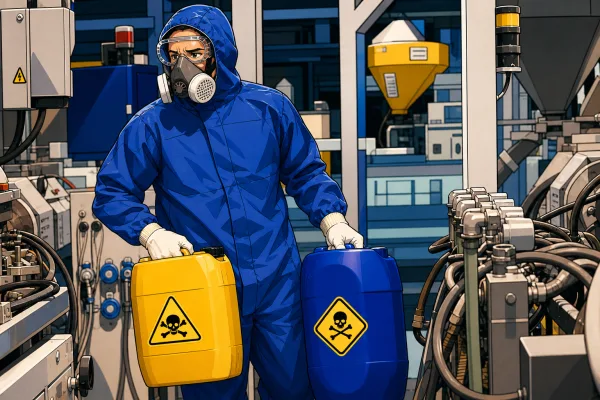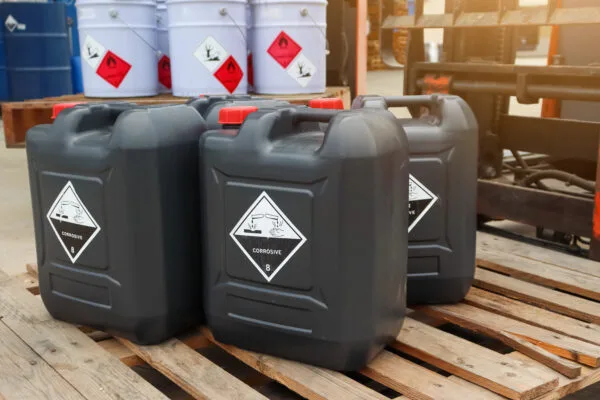



Cleaning work requires the handling of chemical products (stripper, detergent, descaler, degreaser…), most of which are dangerous for health and the environment.
The products used in this sector of activity depend on the type of soiling to be removed (grease, limescale, burnt residues, various traces and stains) and their choice will be made from among the appropriate detergent products.
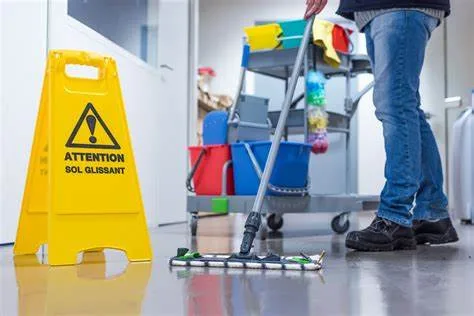
The products used
Aqueous solutions contain surfactants that help disperse grease. In addition, these detergents may include:
- Chelating agents (citric acid)
- Solubilizing agents for greases (alcohols, glycol ethers)
- Acidic or basic agents depending on the deposit (hydrochloric acid, sodium hydroxide)
- Preservatives, colorings, perfumes
The ways in which substances act on the body
- In the form of gases or vapors, they enter the body through the respiratory tract to the lungs and pass into the bloodstream.
- In liquid form, they can either act directly on contact with the skin and cause irritation or burns, or penetrate the skin and contaminate the body.
- In their solid state, they can act on the surface of the skin and cause irritation or burns.
The effects on health
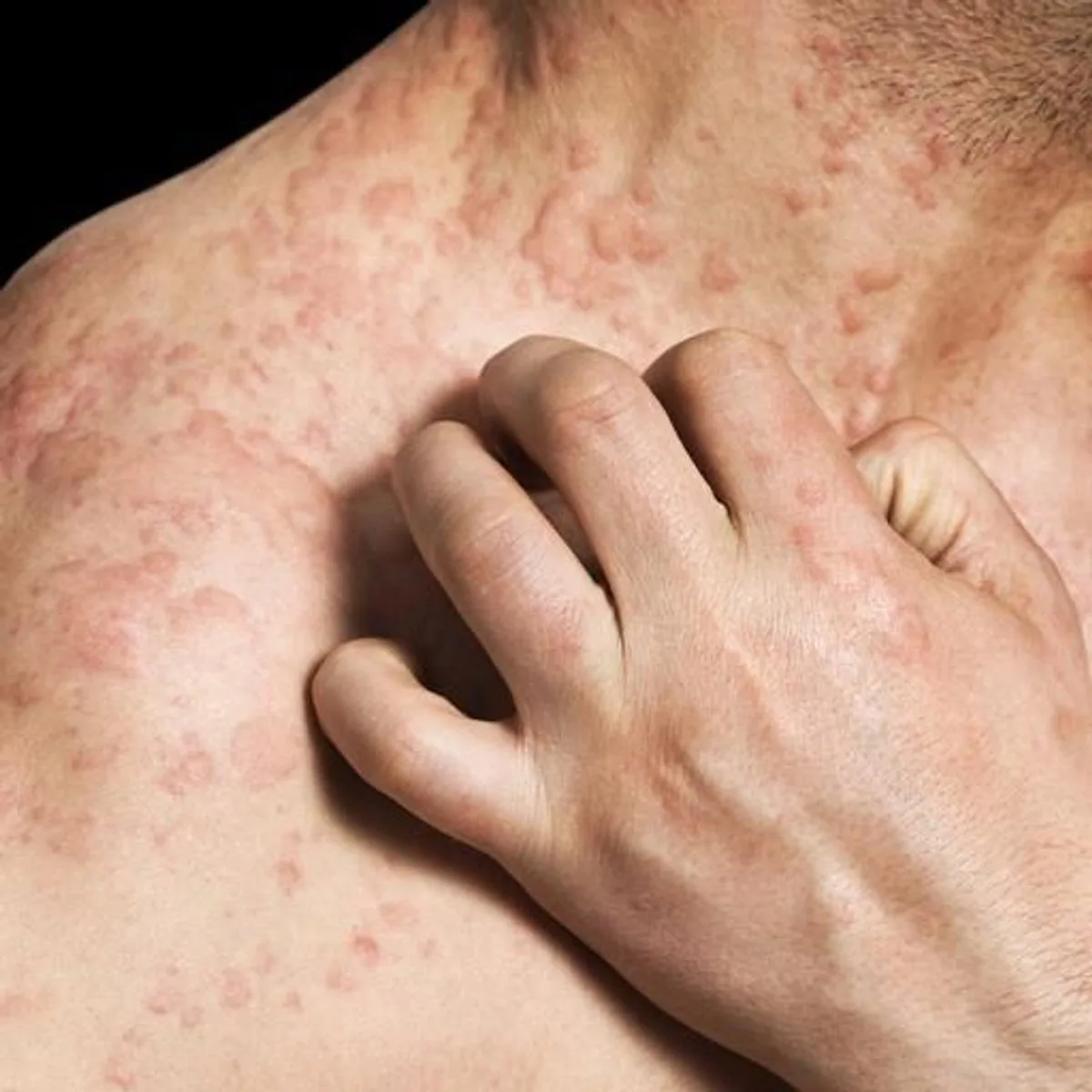
- Skin burns caused by corrosive products such as descalers and drain cleaners
- Skin or respiratory irritations caused by ammonia or bleach, for example
- Skin or respiratory allergies linked to additives such as perfumes and colorings
- Poisoning by inhalation or skin penetration caused, for example, by volatile products
The importance of the application method for hazardous chemicals
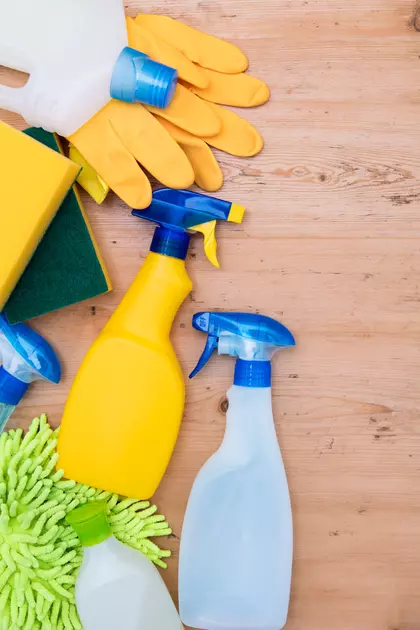
- By spraying (Window cleaner, oven cleaner): the sprayed products will become suspended in the air and can thus poison the employee through skin contact and inhalation.
- Manually (Wipes soaked in product): without gloves, the product will come into direct contact with the skin and could cause irritation, allergies, or even poisoning.
- Using a machine (auto scrubber, pressure washer) or a manual tool (broom, single-disc scrubber): if the safety instructions of the machine or the cleaning method are not followed, the product may come into contact with the skin or eyes and cause irritation or allergies.
The employee's exposure to the products used will also depend on the location of the intervention:
- In a poorly ventilated space, the atmosphere is not renewed very quickly, which will amplify the risks of poisoning by inhalation or ingestion (swallowing) when handling products that release toxic substances.
- In a confined space (example: elevator), these risks will be increased, as symptoms may appear more quickly.
Prevention measures
Implement appropriate management of the products you use (selection, storage)
- Identify the products present in the company and consult the information on the labels.
- Replace dangerous products with less dangerous ones.
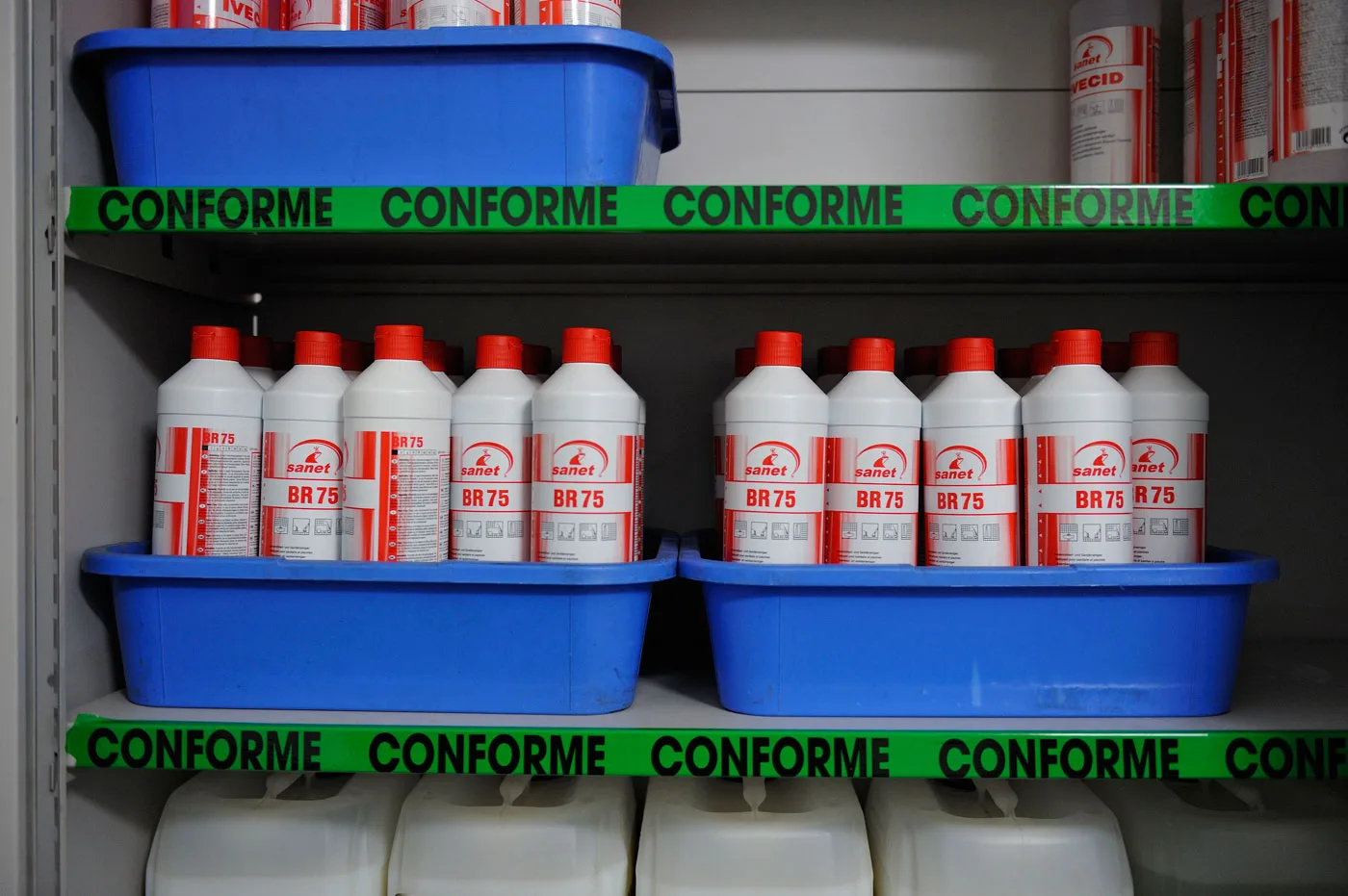
- Provide a suitable storage area and comply with the product storage conditions.
- Limit the quantities of products stored and handled.
- Avoid unpacking a product and keep it in its original packaging.
- If transferring the product, identify and label the new container.
- Provide a specific and well-ventilated space for product preparation
Handle the products safely
- Write up job descriptions incorporating safety instructions (suitable products, quantities to use, application equipment, application technique, etc.).
- Follow the dosage instructions provided by the supplier and avoid mixing products.
- Favor operating methods that reduce contact with products and the suspension of particles: avoid the use of sprayers.
- Choose appropriate attire and provide personal protective equipment suitable for the task (glasses, gloves, boots, clothing).
- Train employees on good practices such as washing their hands before putting on their clothes, removing their gloves while avoiding contact with the product and then washing their hands, etc.
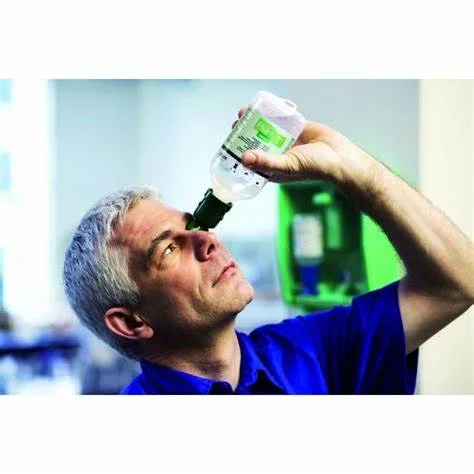
- Install first aid supplies (eye rinse, etc.) and train employees on how to use them.
Train and inform employees
- Train employees in charge of cleaning (understanding and proper use of information on product labels, safety data sheets and job descriptions).
- Raise employee awareness of preventive measures to avoid exposure to products and of emergency procedures.