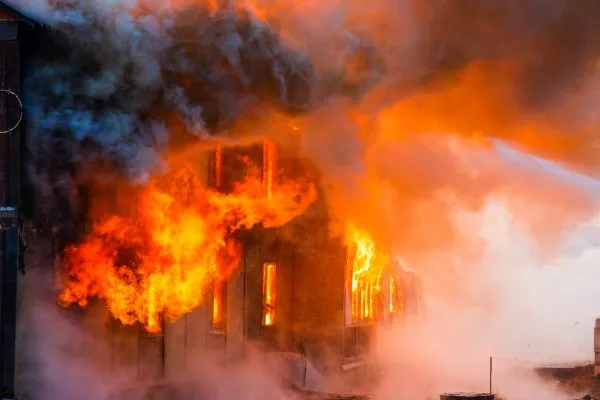



Fires affect all branches of activity. In more than 30% of cases, hot work has triggered these often catastrophic fires.
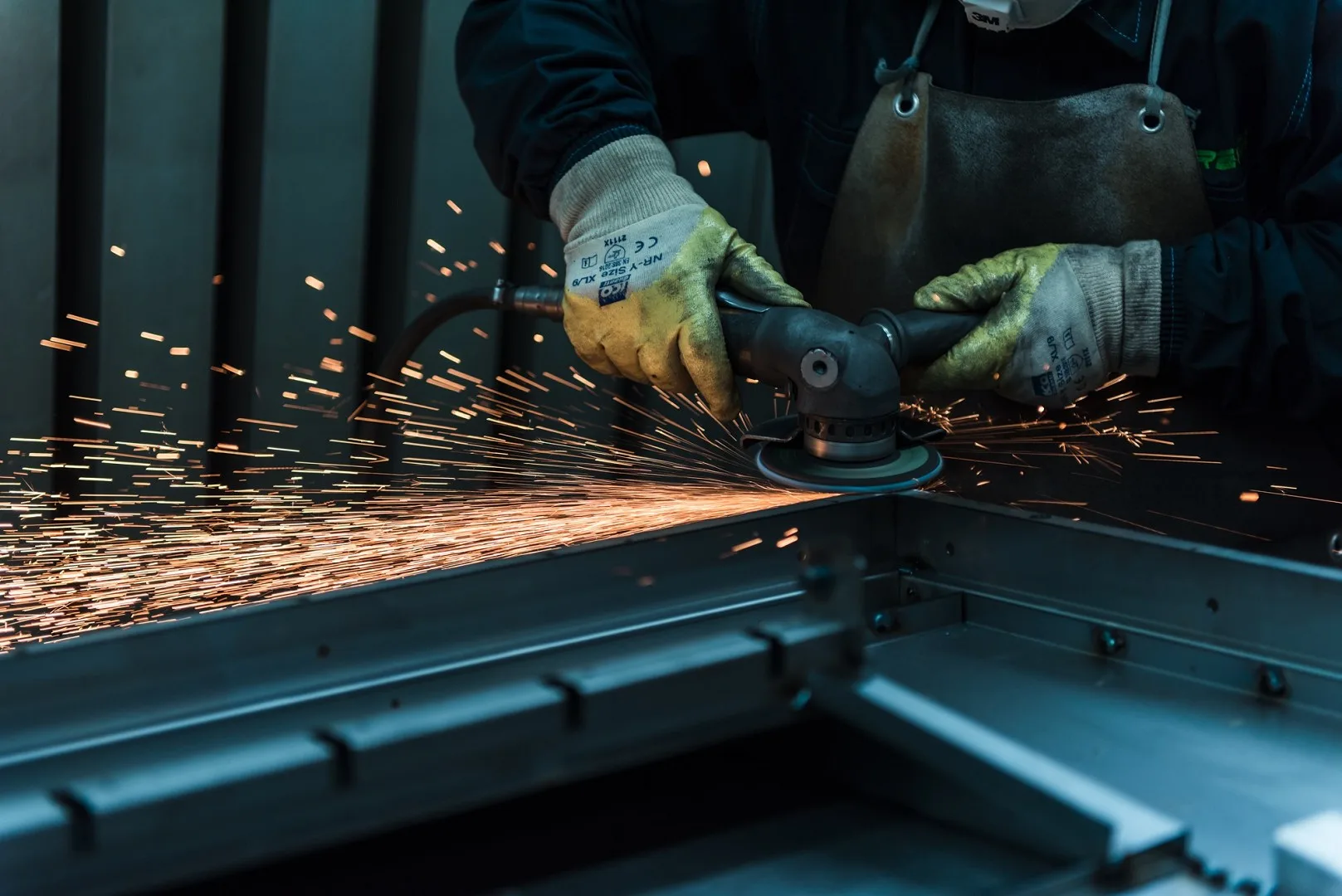
Hot work includes:
- material removal or equipment disassembly operations (cutting, grinding, deburring…)
- assembly (welding) or sealing (bitumen) operations
At MD Conseil Formation, we offer training tailored to your needs to help you complete your fire permits on a daily basis. We also offer training to prepare your internal teams in the event of a fire.
Who fills it out?
Established by the employer or their representative (subject to a valid delegation of authority), the hot work permit authorizes the execution of hot work under defined conditions, whether carried out by the company's staff or by that of an external company.
Three actors within the user company:
- the employer or their representative,
- The person in charge or supervising the work, the competent individual responsible for ensuring the smooth technical execution of the intervention,
- The operation's security officer, a person competent to ensure the implementation of the necessary security measures to prevent risks at the intervention site and in the surrounding area.
Two actors from the intervening company:
- The intervention manager, a competent person responsible for ensuring the smooth technical execution and safe implementation,
- the operator, competent person in charge of carrying out the intervention.

The hot work permit must be validated by the relevant personnel from the user company mentioned above, as well as by the person in charge of the intervention from the contractor. These individuals may be the same person, depending on the company's organizational structure. Each signatory will receive a copy of the document. Before work begins, it is essential to inform all operators in the areas covered by the hot work permit of the measures taken.
How long is it valid for?
It must be reassessed as soon as one of its constituent elements has changed (location, environment, process, nature of the work, stakeholders, etc.). Its validity period is clearly indicated on the document in any case.
If a fire permit is valid for several days, its validity must be checked daily. This is because it is essential to ensure that no new risks arise, even in neighboring premises (related to thermal conduction, for example).
For companies operating in successive shifts, a fire permit must be validated at each job change, in order to ensure the transmission of information to the next team.
At the end of the work, it is advisable to archive the fire permit for a period similar to that of the prevention plans (recommended period: 5 years), which allows for the creation of a history and the establishment of traceability of interventions.
The 3 stages of a fire permit
Preparation
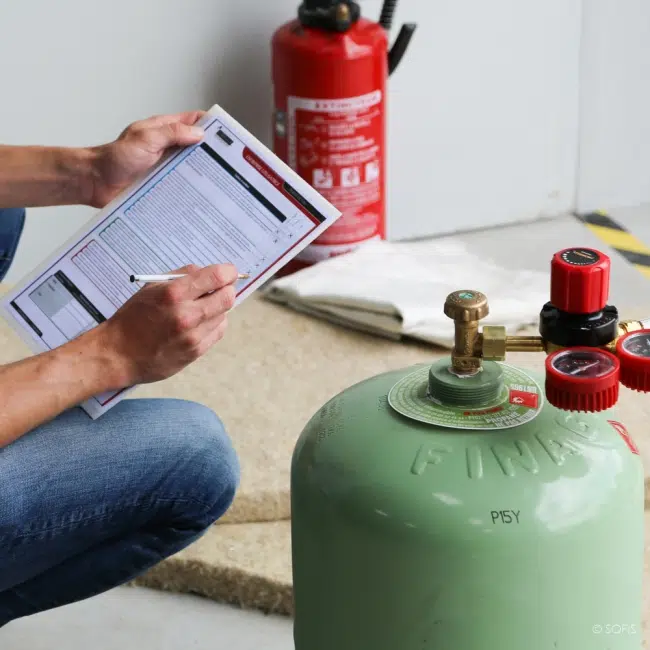
The most important phase remains the preparation of the operation. Careful planning beforehand leads to gains in terms of prevention, as well as in the duration and quality of the intervention.
To identify all the risks associated with hot work during an intervention, a precise and chronological work procedure must be drawn up. This procedure specifies, in particular, the intervention phases involving hot work, the tools and processes used, and the intervention locations. The risk analysis of this procedure should lead to the definition of specific measures, such as the implementation of mechanical ventilation systems in confined spaces, spot or continuous air monitoring, or the isolation of the equipment. It is also important to consider the existing detection or automatic fire suppression systems in the intervention area.
In the event of a complete or partial system failure, at least equivalent security measures must be put in place, in agreement with the company's insurer.
When an external company is involved, it must communicate its operating procedures in advance.
Realization
Supervision of the operation by a person trained in first response in firefighting and equipped with the necessary resources is essential for the proper execution of the work.
During the intervention, any change resulting in a modification of the initial operating procedure (schedule, additional operations, different processes, new locations) requires a reassessment of risks and a redefinition of prevention measures if appropriate.
After work
The period following the work should not be neglected. Indeed, analysis of the number of incidents has shown that the risks of fire and explosion can persist after the work has been completed (slow-growing smoldering fires, for example).
At MD Conseil Formation, we offer training tailored to your needs to help you complete your fire permits on a daily basis. We also offer training to prepare your internal teams in the event of a fire.