


Introduction
Risk assessment related to dangerous machinery is a major occupational safety issue in French industry. According to the National Institute for Research and Safety (INRS), machinery is involved in 10 to 151 workplace accidents resulting in more than four days of lost time, representing approximately 55,000 accidents annually, including around twenty fatalities. This reality underscores the importance of a rigorous approach to machine risk assessment, particularly for SMEs and very small businesses, which account for a significant proportion of these accidents.
1. Regulatory framework and legal obligations
1.1 The European framework: the Machinery Directive 2006/42/EC
The Machinery Directive 2006/42/EC, transposed into French law by Decree No. 2008-1156 of 7 November 2008, defines the scope of dangerous machinery and establishes the essential health and safety requirements. This directive applies to any machine defined as «"an assembly equipped or intended to be equipped with a drive system other than directly applied human or animal force, composed of interconnected parts or components, at least one of which is movable, and which are joined together for a specific application"».
Machinery covered by this directive must undergo a risk assessment by the manufacturer, evidenced by the CE marking and a declaration of conformity. This requirement extends to work equipment used within the company, creating a chain of responsibility between the manufacturer, importer, and end user.
1.2 Employer obligations according to the Labour Code
According to Article L4121-1: "The employer shall take the necessary measures to ensure the safety and protect the physical and mental health of workers." Articles R4321-1 et seq. impose four specific obligations:
- Risk assessment related to the use of work equipment
- Bringing equipment into compliance with applicable technical rules
- User training and information
- Preventive and corrective maintenance
1.3 Criminal, civil and administrative liabilities
Criminal liability of managers
Article 121-3 of the French Penal Code establishes the criminal liability of legal entities and their directors in the event of a workplace accident. Recent case law confirms a strict approach by the courts. The ruling of the Criminal Chamber of the Court of Cassation of March 15, 2022, reiterates that "awareness of the danger is sufficient to establish gross negligence," even in the absence of a deliberate violation of a safety obligation.
- Fines of up to 75,000 euros for individuals
- Prison sentences of up to 3 years in cases of manslaughter
- Fines of up to 375,000 euros for legal entities
- Additional penalties (prohibition from practicing, closure of establishment)

Civil liability and compensation
The employer's civil liability is automatically engaged in the event of a workplace accident (Article L411-1 of the Social Security Code). This liability may be increased in cases of inexcusable negligence, allowing the victim to obtain additional compensation covering the full extent of the damages suffered.
Administrative sanctions
The labor inspectorate has broad powers to penalize breaches of machine safety rules. Administrative sanctions include:
- Formal notice to comply
- Temporary cessation of activity (article L4721-1)
- Offense reports sent to the public prosecutor
- Referral to the judge of summary proceedings for emergency measures

2. Technical standards and reference documents
2.1 The ISO 12100 standard: general design principles
The EN ISO 12100:2010 standard, "Safety of machinery — General principles for design — Risk assessment and risk reduction," is the reference standard for machine risk assessment. It establishes a four-step methodology:
- Determining the machine's limits: usage, spatial, temporal, and other limits
- Identification of hazardous phenomena: energies, substances, dangerous situations
- Risk assessment: a combination of the severity of the damage and the probability of occurrence
- Risk assessment: judgment on the tolerance of the residual risk
This systemic approach allows for a comprehensive risk assessment, a prerequisite for any effective prevention measure.
2.2 ISO 13849 standard: Safety of control systems
The EN ISO 13849-1:2015 standard, "Safety of machinery — Safety-related parts of control systems," defines the safety requirements for machine control systems. It introduces the concept of "Performance Level" (PL), which quantifies the ability of a safety-related control system to perform a safety function under foreseeable conditions.
Performance levels range from PLa (low risk) to PLe (high risk), allowing protective measures to be adapted to the intensity of the identified risk.
2.3 CE marking: conformity and responsibilities
The CE marking certifies that the machine complies with the essential health and safety requirements of the Machinery Directive. It establishes the manufacturer's responsibility for the risk assessment carried out during the design phase. The employer using the machine must ensure that this marking is present and that the intended use and actual use of the machine are consistent.
The absence of CE marking or the use of a non-compliant machine exposes the employer to criminal penalties and constitutes an aggravating factor in the event of an accident.
3. Risk assessment methodologies
3.1 The FMEA Method
The FMEA (Failure Mode and Effects Analysis) method is a preventive analysis tool particularly well-suited to complex machines. It is structured in six steps:
- Functional decomposition
- Failure Mode Analysis
- Evaluation of the effects
- Criticality calculation
- Risk prioritization
- Definition of corrective actions
This quantitative approach allows for an objective prioritization of prevention actions and traceability of decisions taken.

3.2 The HAZOP method
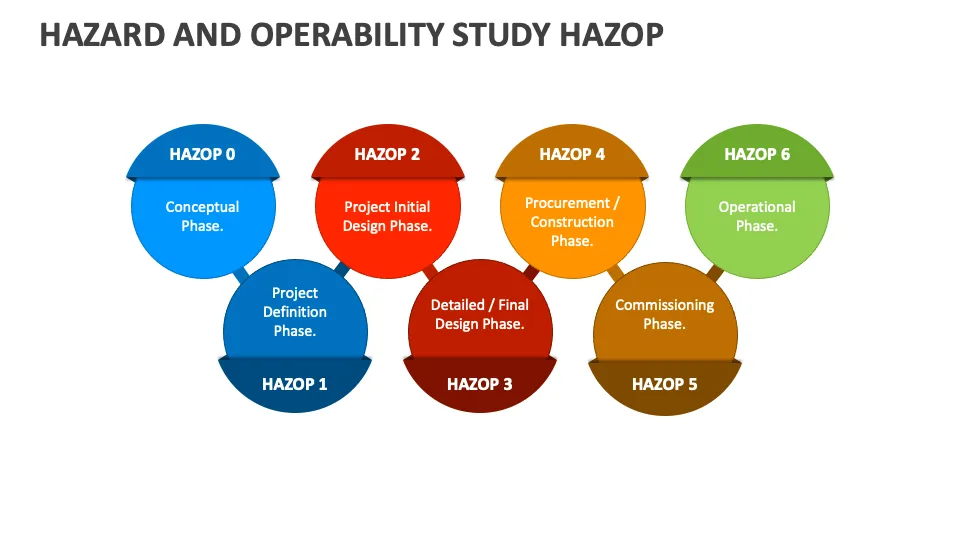
The HAZOP method, initially developed for the chemical industry, is effectively adapted to automated machines and complex systems. It is based on seven steps:
- Team composition
- System breakdown
- Parameter definitions
- Application of keywords
- Analysis of deviations
- Risk assessment
- Recommendations
The effectiveness of the HAZOP method relies on the quality of the facilitation and the collective expertise of the analysis team.
4. Cost-benefit analysis of prevention
4.1 Direct and indirect costs of machine accidents
Economic analysis of machine accidents reveals a considerable financial impact on companies.
Direct costs:
- Work accident contributions and possible surcharge
- Medical expenses and daily allowances
- Permanent disability pensions
- Replacement costs and staff training
Indirect costs:
- Production stoppages and productivity losses
- Damage to the company's image
- Staff demotivation and turnover
- Administrative and legal costs
- Insurance surcharges
4.2 Return on investment of prevention
Investing in prevention generates a positive return on investment in 85% of cases.
- Cost of the risk assessment process: 0.5 to 2% of turnover
- Savings achieved: reduction in occupational accident/illness insurance contributions, productivity gains, improved image
- Return on investment period: generally less than 3 years
5. Case law examples and accident cases
5.1 Case No. 1: Lack of training and fatal accident
A small metalworking company with 25 employees uses a 200-ton hydraulic press for stamping metal parts. The accident occurred during manual unblocking performed by a 22-year-old temporary worker who had not received specific training for this operation.
The operator attempted to remove a part jammed in the die without locking out the machine. The press automatically restarted, causing the operator to be fatally crushed.
The expert assessment reveals the absence of safety devices conforming to ISO 13849 (PL level d required), the impossibility of simple lockout/tagout, and the absence of presence detection in the danger zone.
The criminal court sentenced the manager to 18 months suspended prison sentence and a fine of 50,000 euros for involuntary manslaughter.

5.2 Case #2: Conveyor Accident and Maintenance Failure
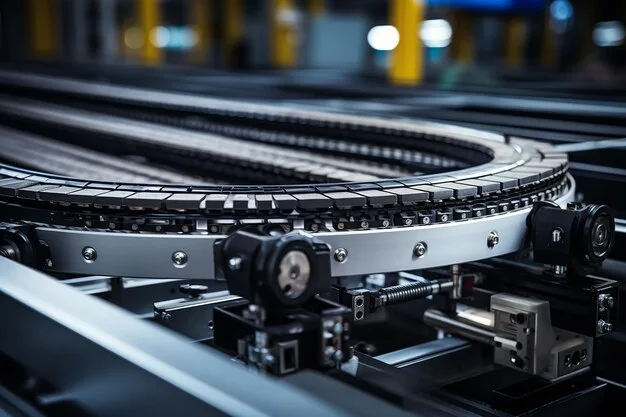
An agri-food company with 80 employees operates an automated conveyor for product packaging.
During a troubleshooting operation, the technician bypassed the safety devices to quickly access the point of the blockage. His hand was caught in the drive mechanism, resulting in the amputation of three fingers.
The investigation highlights wear and tear on protective devices, the absence of preventive maintenance in accordance with the manufacturer's manual, and lockout/tagout procedures not followed out of habit.
5.3 Lessons from case law
These cases illustrate the increasing severity of legal requirements regarding machine safety. The criteria for assessing gross negligence are evolving towards greater employer liability, particularly in the presence of:
- Failure to comply with applicable safety standards
- Lack of specific training on machine risks
- Lack of preventive maintenance
- Typical circumvention of protective devices
6. Practical recommendations for SMEs and very small businesses
6.1 Structuring the evaluation process
An effective risk assessment approach is based on three organized phases:
Phase 1 — Initial diagnosis:
- Comprehensive inventory of machines and work equipment
- Verification of regulatory compliance (CE marking, instruction manuals)
- Identification of hazardous work situations
- Formation of the multidisciplinary evaluation team
Phase 2 — Risk Assessment:
- Application of FMEA or HAZOP methods depending on complexity
- Risk assessment according to a grid adapted to the company
- Prioritizing action
- Assessment documentation (regulatory traceability)
Phase 3 — Action Plan:
- Defining prevention measures in order of priority
- Budgeting and investment planning
- Staff training on new equipment and procedures
- Implementation of monitoring indicators
6.2 Integration into the corporate strategy
The effectiveness of this approach requires its integration into the company's overall strategy:
- Visible involvement of senior management
- Allocation of specific budgetary resources
- Continuing education for supervisors and prevention specialists
- Regular communication on the results obtained
Conclusion
Risk assessment of machinery is a legal, technical, and economic imperative for industrial companies. Beyond regulatory compliance, it represents a strategic investment that generates long-term value. Mastering assessment methods (FMEA, HAZOP), applying technical standards (ISO 12100, ISO 13849), and integrating a cost-benefit approach enable SMEs and very small businesses to develop a high-performing safety culture.
The evolving legal framework towards increased managerial responsibility underscores the urgent need for a proactive approach to machine safety. Analysis of accident cases reveals that organizational failures (training, maintenance, procedures) are more prevalent than technical defects, highlighting the importance of the human factor in prevention.
The success of this approach rests on three pillars: the technical expertise of the assessors, the managerial commitment of senior management, and the active participation of the operators. This long-term, systemic approach forms the basis for effective machine risk prevention and sustainable industrial performance.
In a competitive economic environment, companies that integrate machine safety as a competitive advantage benefit from improved productivity, a strengthened employer brand, and increased business sustainability. The initial investment in risk assessment thus becomes a lever for overall company performance.